 S3 Enterprise
42 screens
Production
Making things: planning what to make, work orders through the floor step by step, what was made, what was used, and what it cost. Every page in the Production menu, what it is for, and where it leads; then the main records, tab by tab. The pictures are the demo company (Foundry Valves) after the test runs, so the names and numbers are made up. For the story, read How production works first.
Ways of making
A factory makes in one or more of these ways, switched on in Production options; the menu shows only the pages of the ways switched on:
| Way | For | Its pages |
|---|---|---|
| Work orders | Made against an order, step by step on the floor (machining, assembly, fabrication) | Work orders, Shop floor, Inspection, Material, Receive made... |
| Making in one step | Parts out and the item in, in one entry (simple assembly, packing) | Make in one step |
| Cutting | Plate, bar and coil cut into parts | Cutting, Nesting |
| Batches from recipes | Chemicals, paints, food, pharma | Work orders with a batch |
| Lines and machines | A daily report a machine and shift; moulds and dies with their shots | Daily production, Tools |
How making goes
The work
Making
Jobs
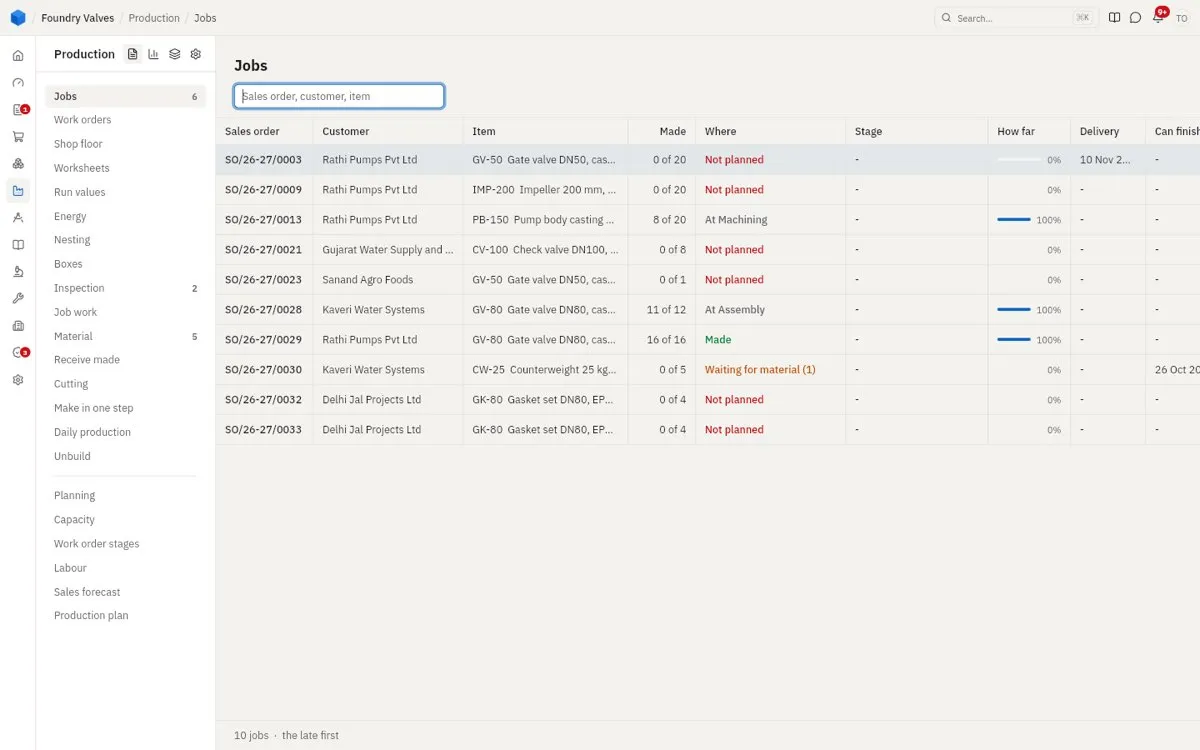
Each sales order line being made here, from the customer's side: how many made of how many, where it is now (not planned, waiting for material, at a step, made), how far, and when it can finish. Late ones first.
Work orders
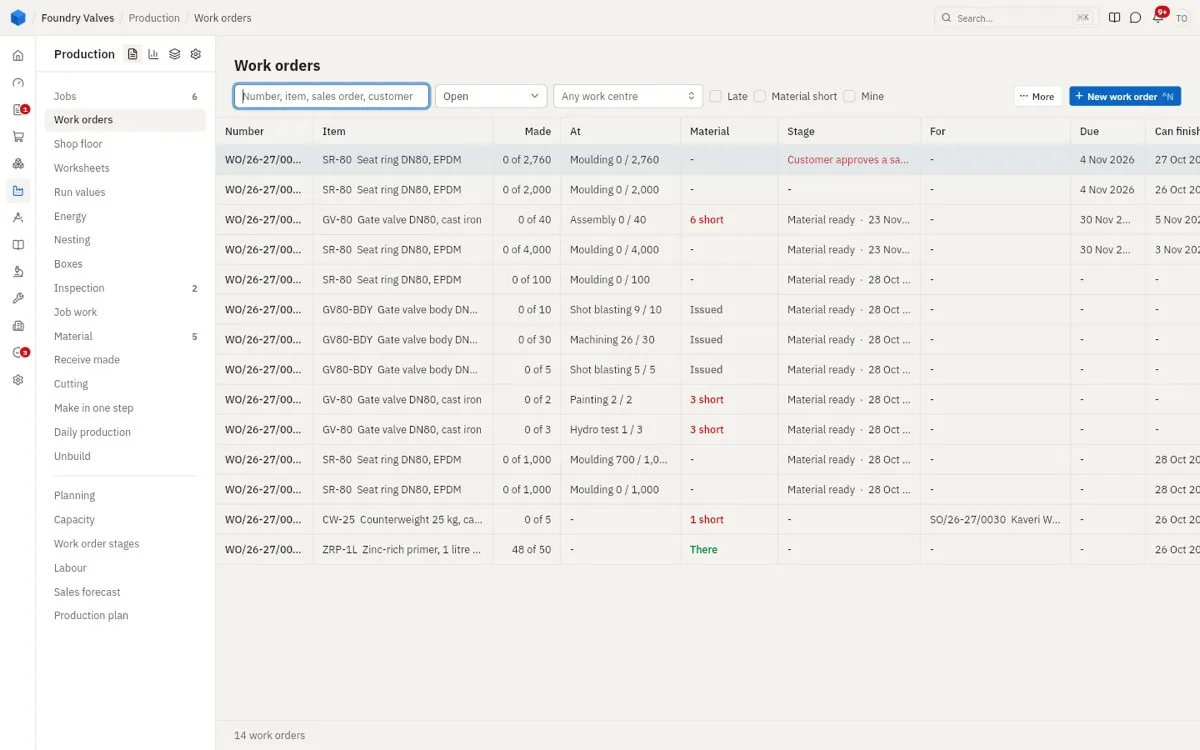
Every order to make something: the item, how many made, the step it is at, whether its material is in or short, its stage, what it is for (stock or a customer's order), when it is due and when it can finish. Late and Material short narrow it.
Shop floor
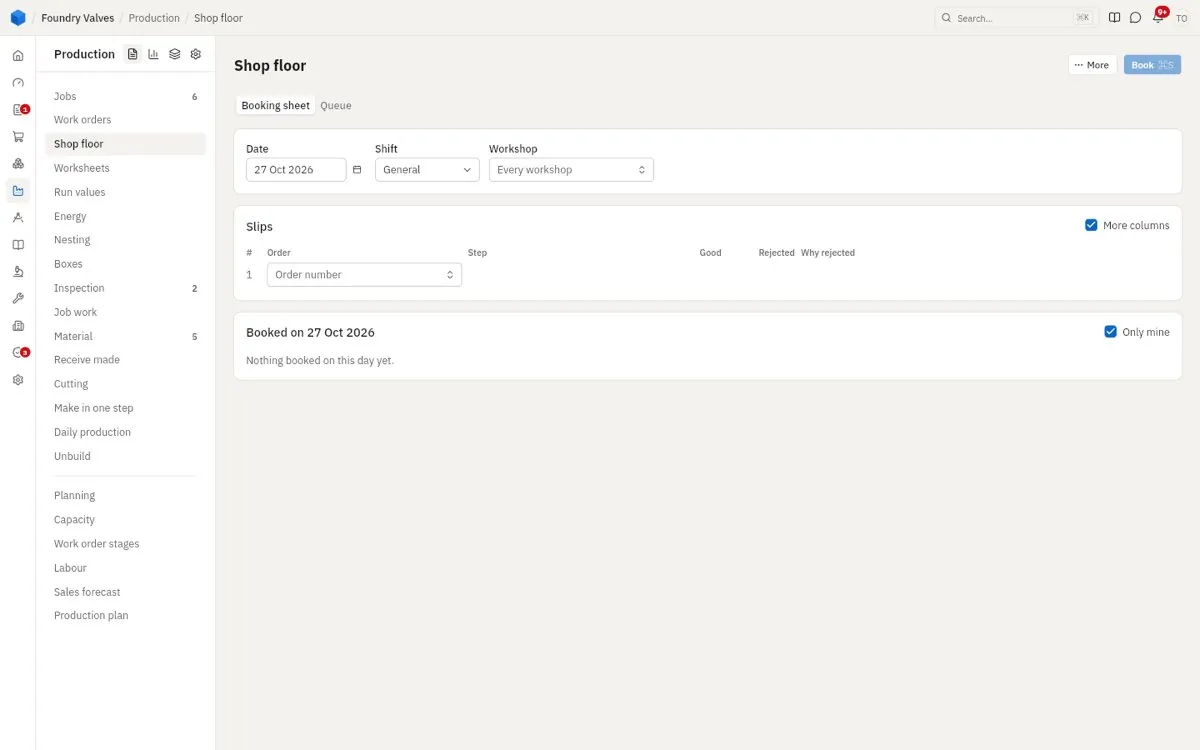
The supervisor's booking sheet for a shift: each slip - the order, the step, good and rejected - booked in one go. Queue shows what waits at each work centre.
Worksheets
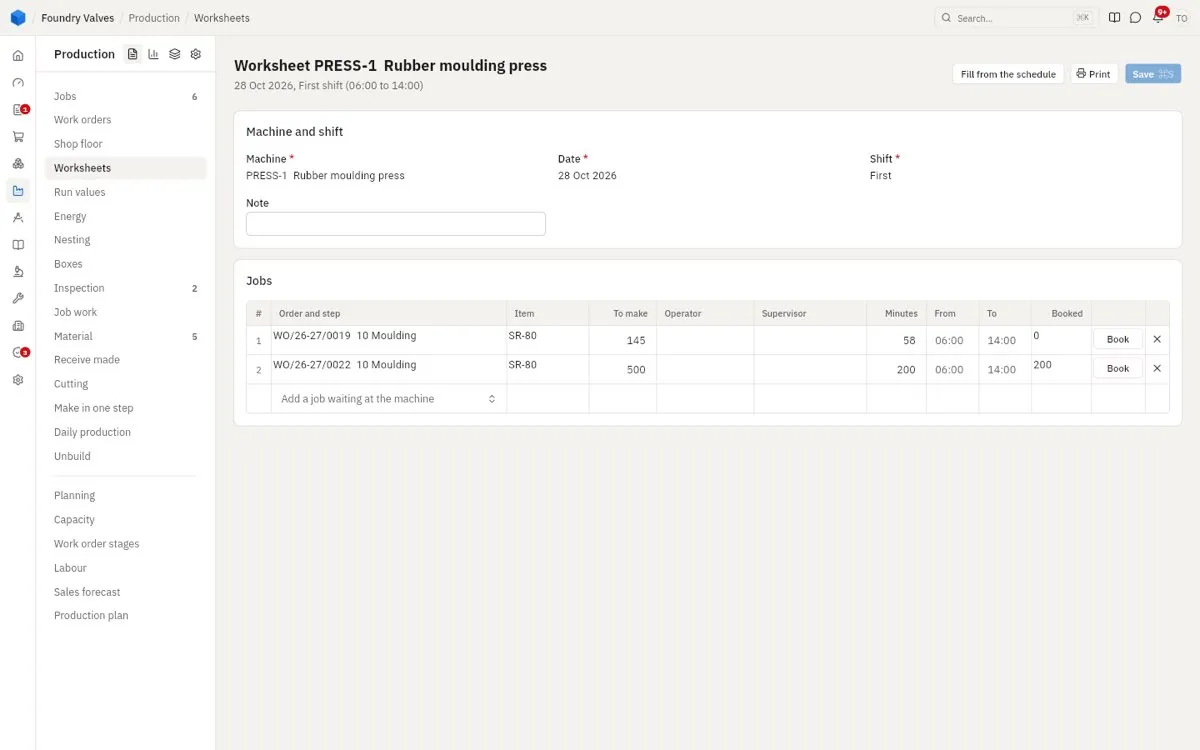
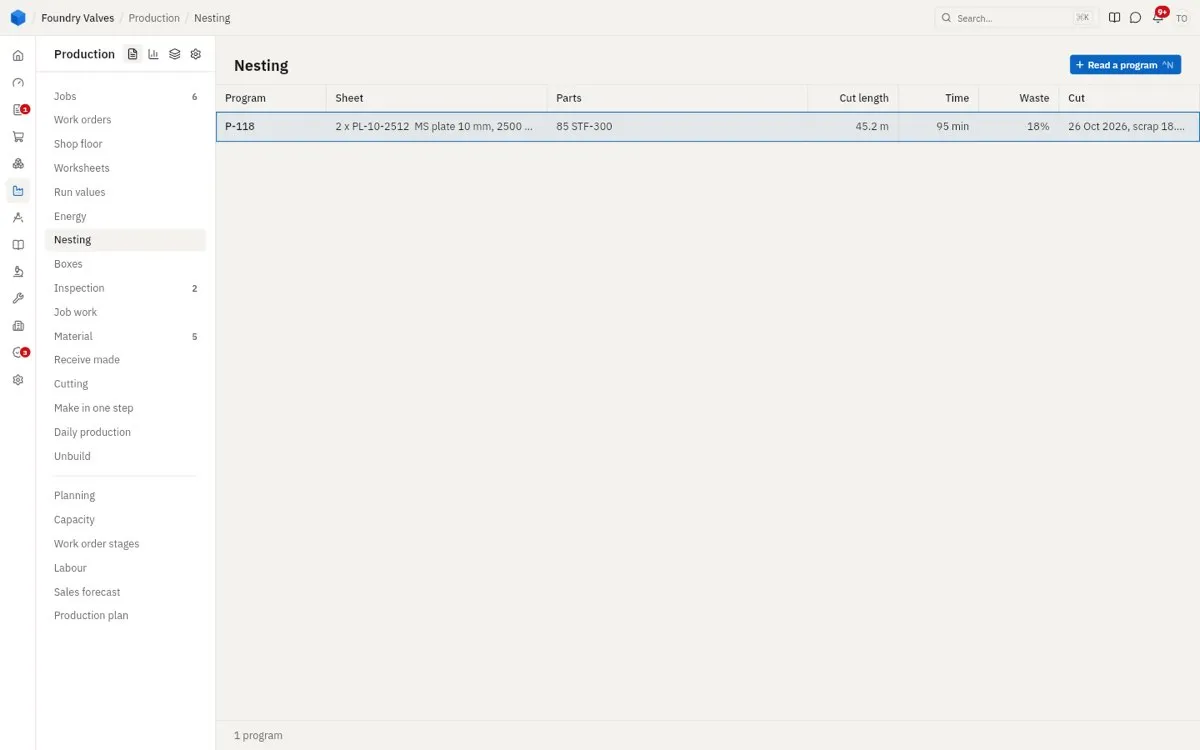
A machine's plan for a shift: the jobs to run on it, how many to make, and what was booked against each.
Run values
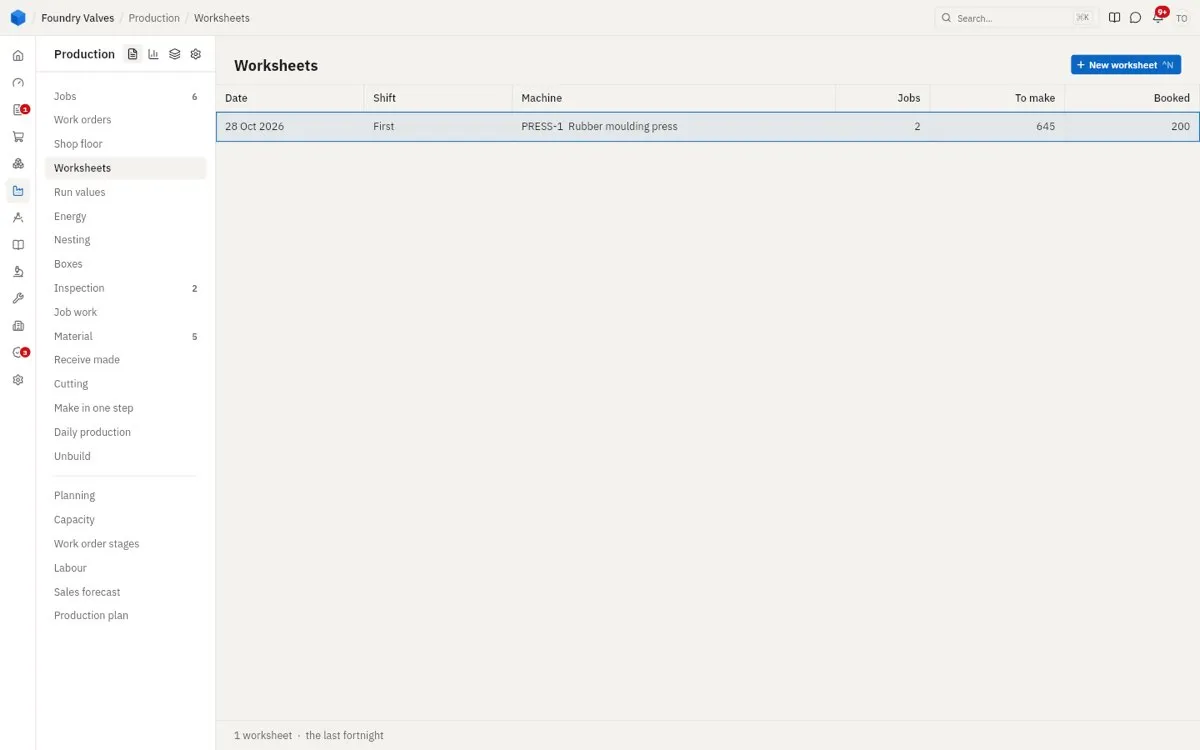
Readings taken while making - a bore size, a test pressure, a mould temperature - against their limits. One outside its limits shows in red. Out of limits only narrows it.
Energy
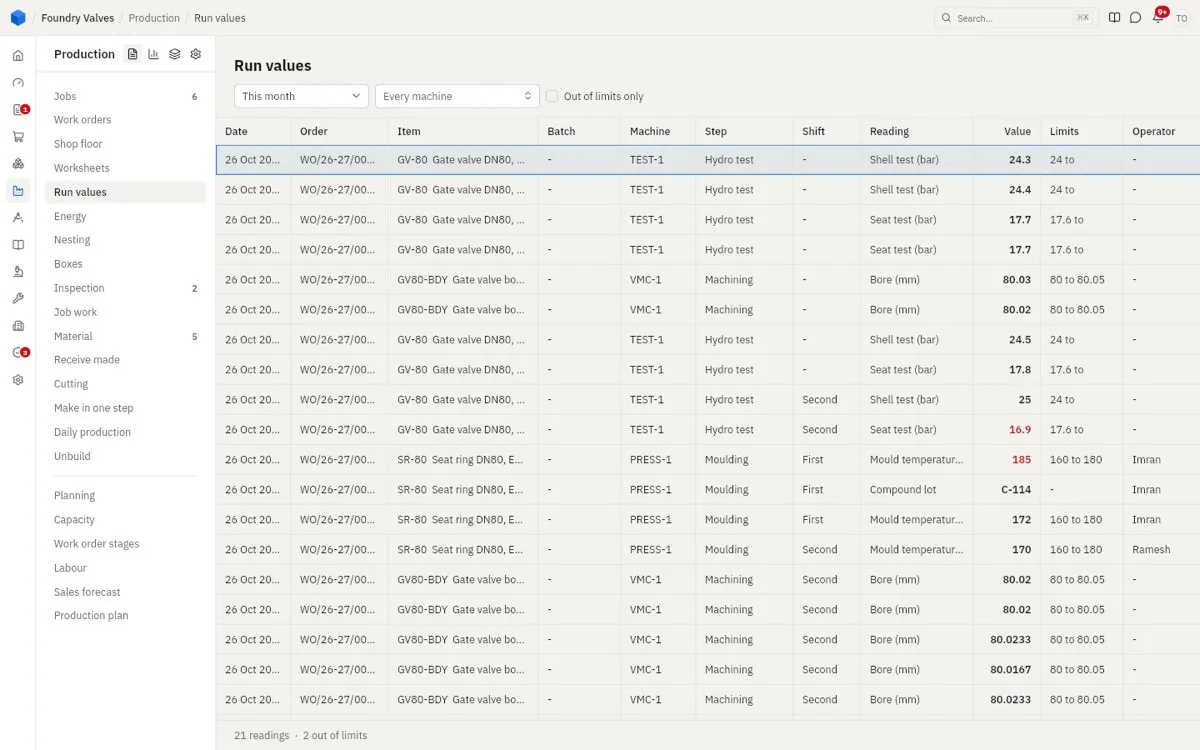
Power used by each meter a day, its cost, the good pieces made, and the energy a piece.
Nesting
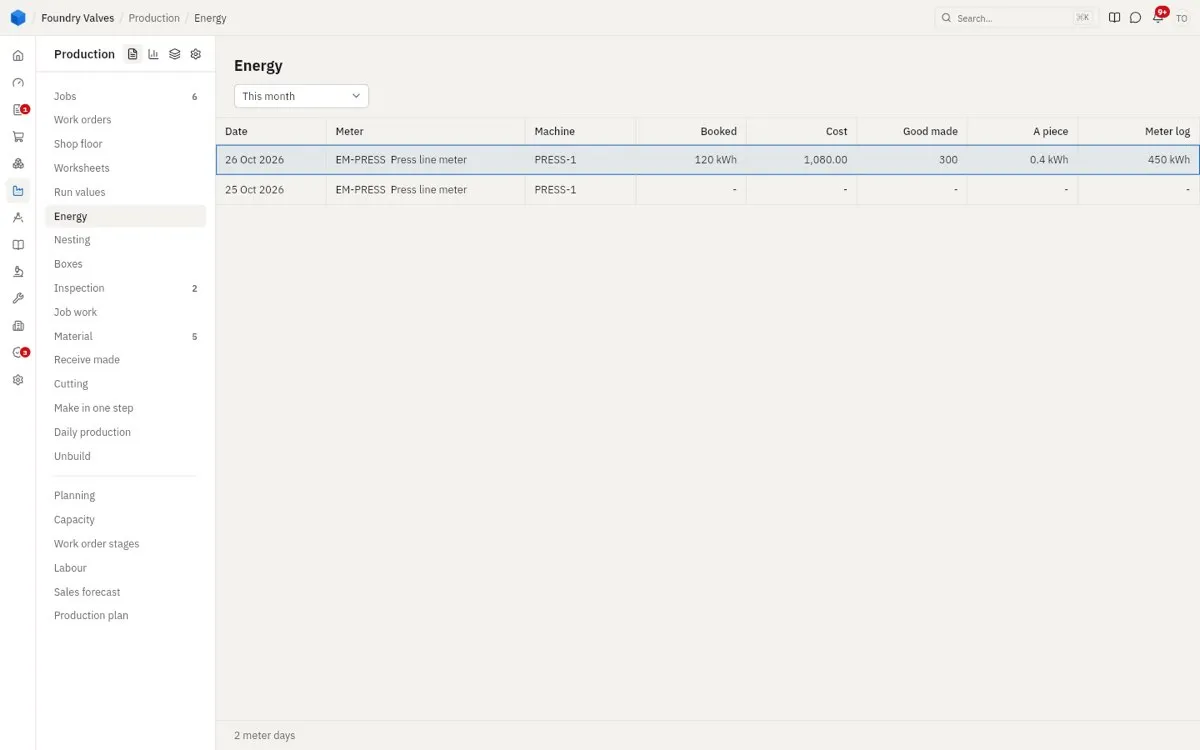
A cutting machine's nesting program: the sheets it cuts, the parts it makes, cut length, time and waste.
Boxes
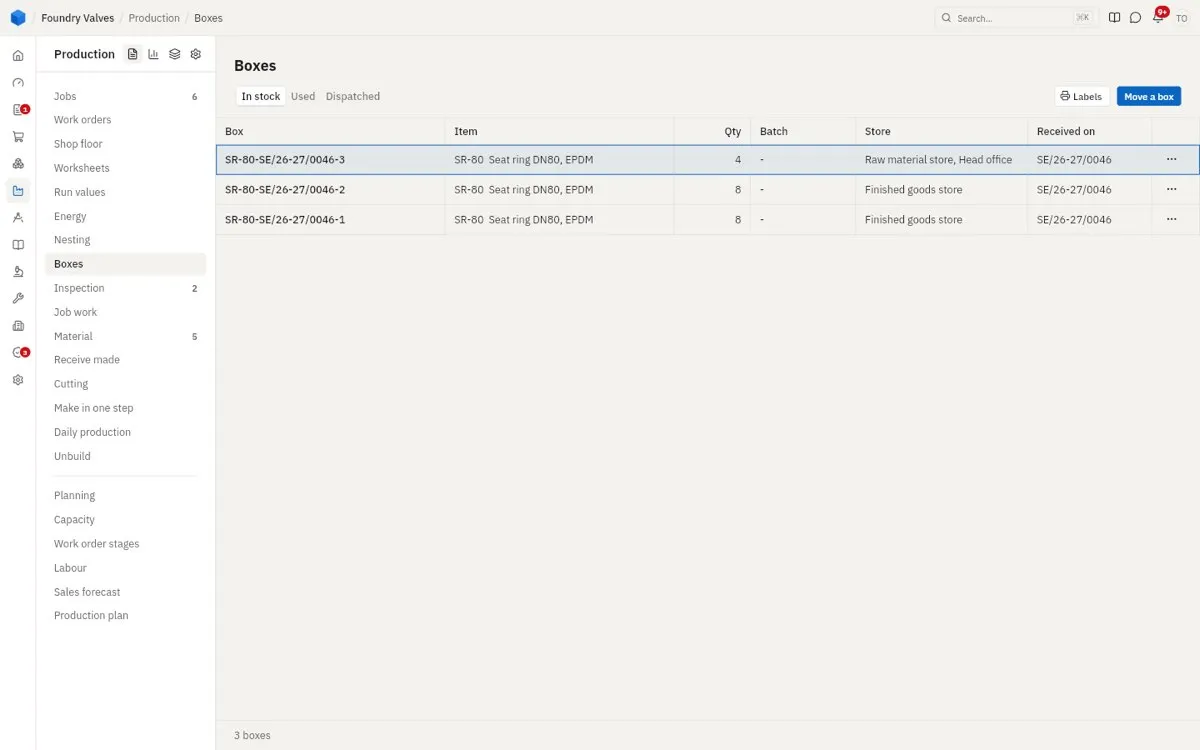
Made goods packed in boxes with a number each - in stock, used, dispatched - so a box can be moved and labelled as one.
Inspection
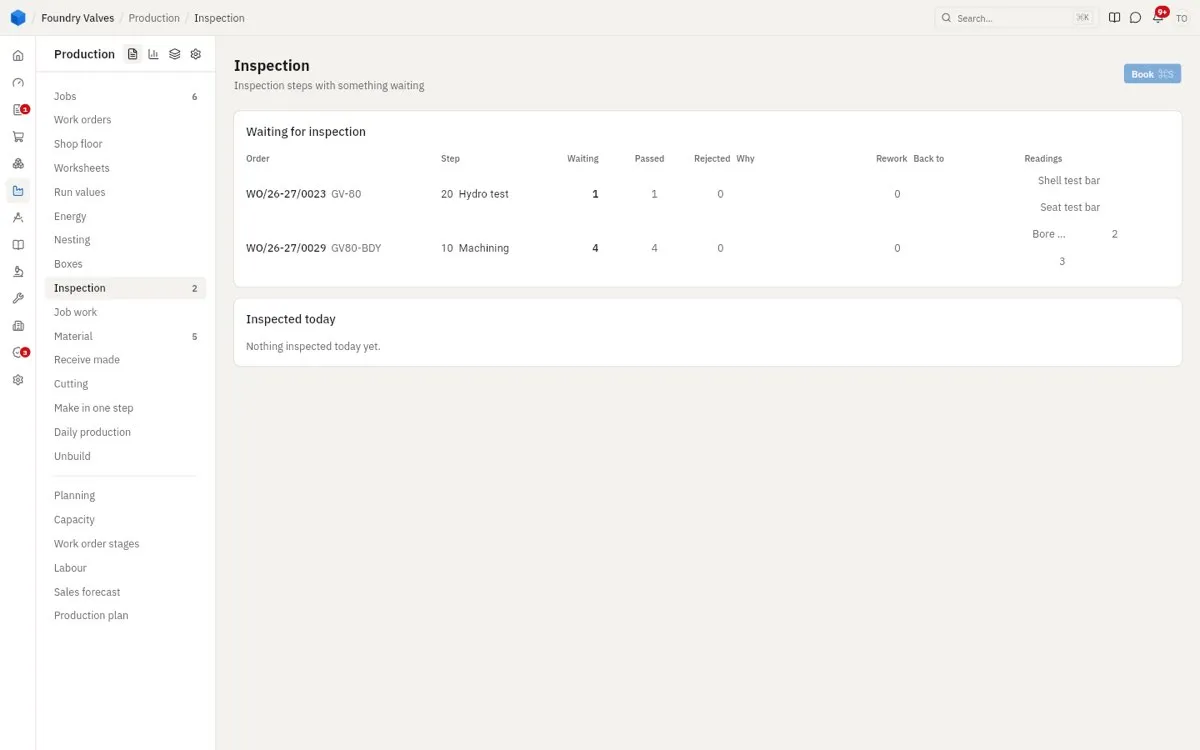
Every inspected step with pieces waiting: the inspector passes, rejects or sends them to rework, with the readings the step asks for.
Job work
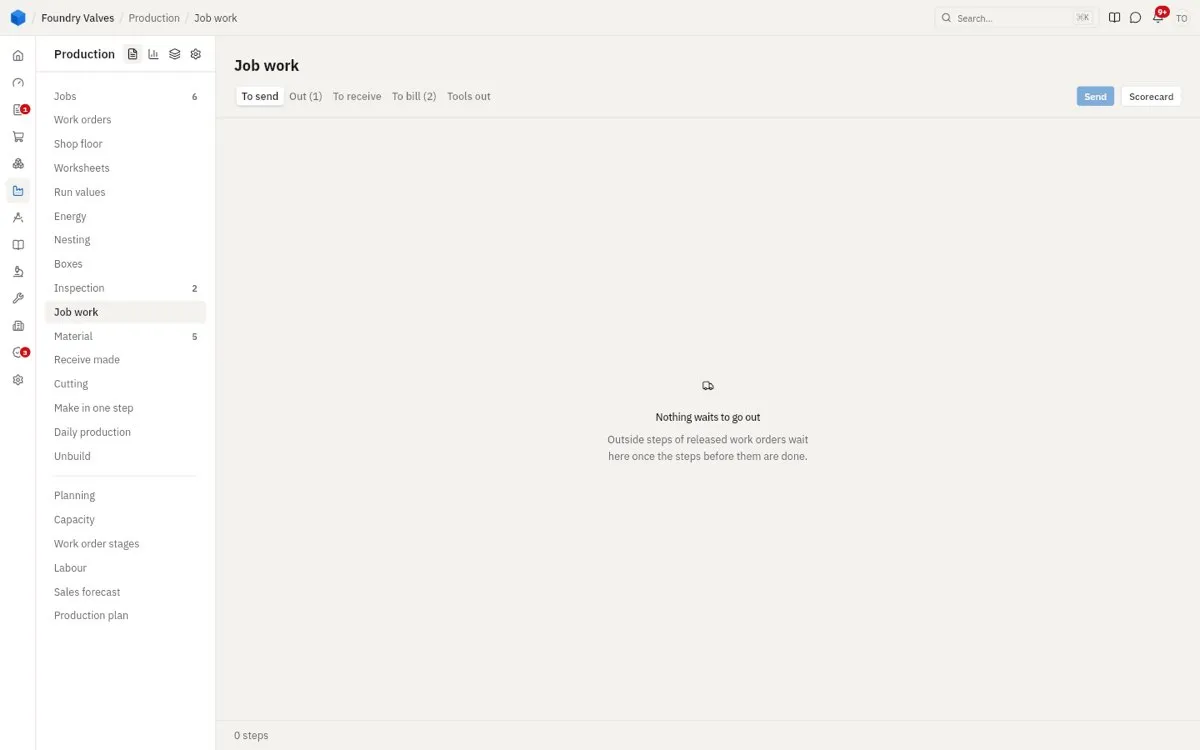
Steps done outside: what is to send to a job worker, what is out, what is to receive, what is to bill, and tools lent out. Scorecard shows how each job worker does.
Material
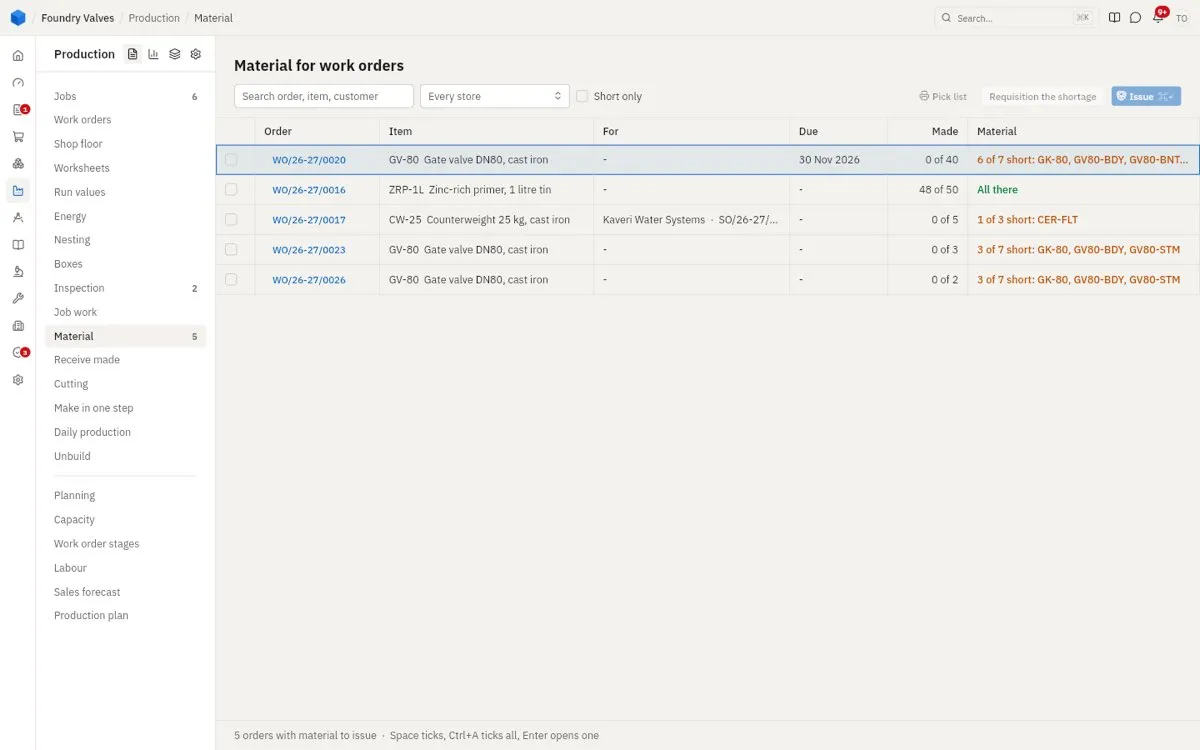
Every open work order and its material: all there, or which parts are short. Tick orders, Issue their material, print a Pick list, or Requisition the shortage.
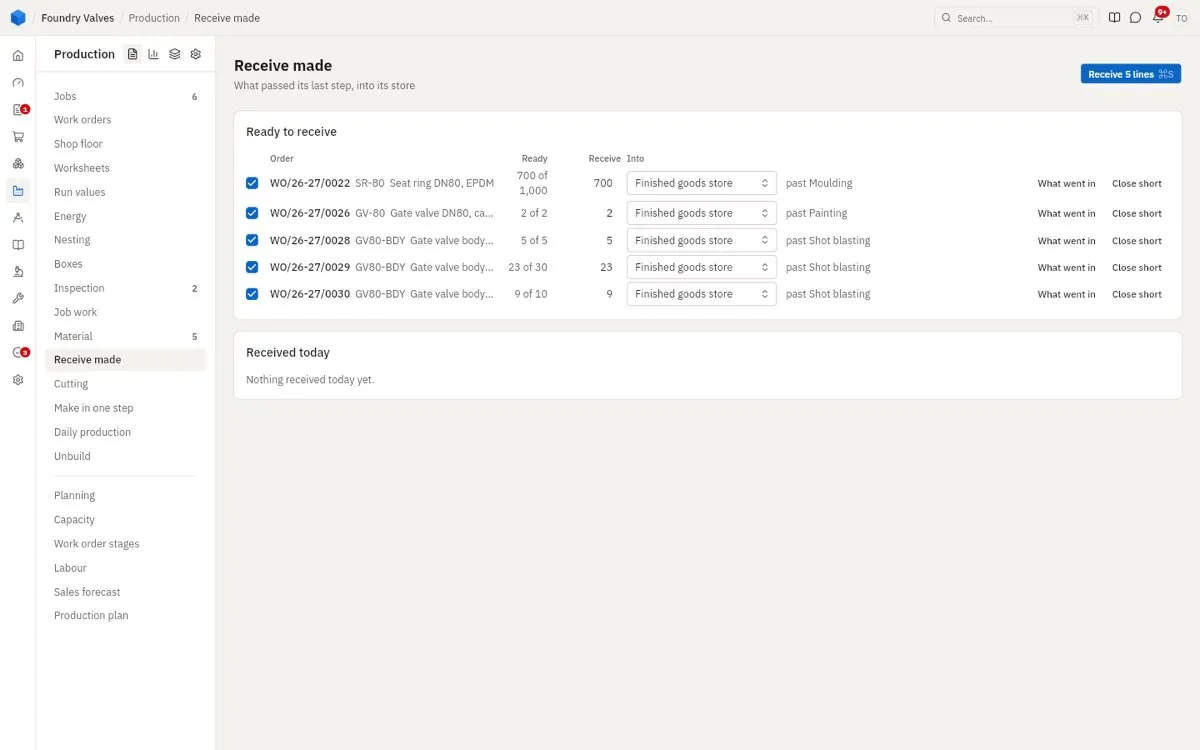
Receive made
What has passed its last step and is ready to go into the store: tick, pick the store, Receive. Close short ends an order that will make less.
Cutting
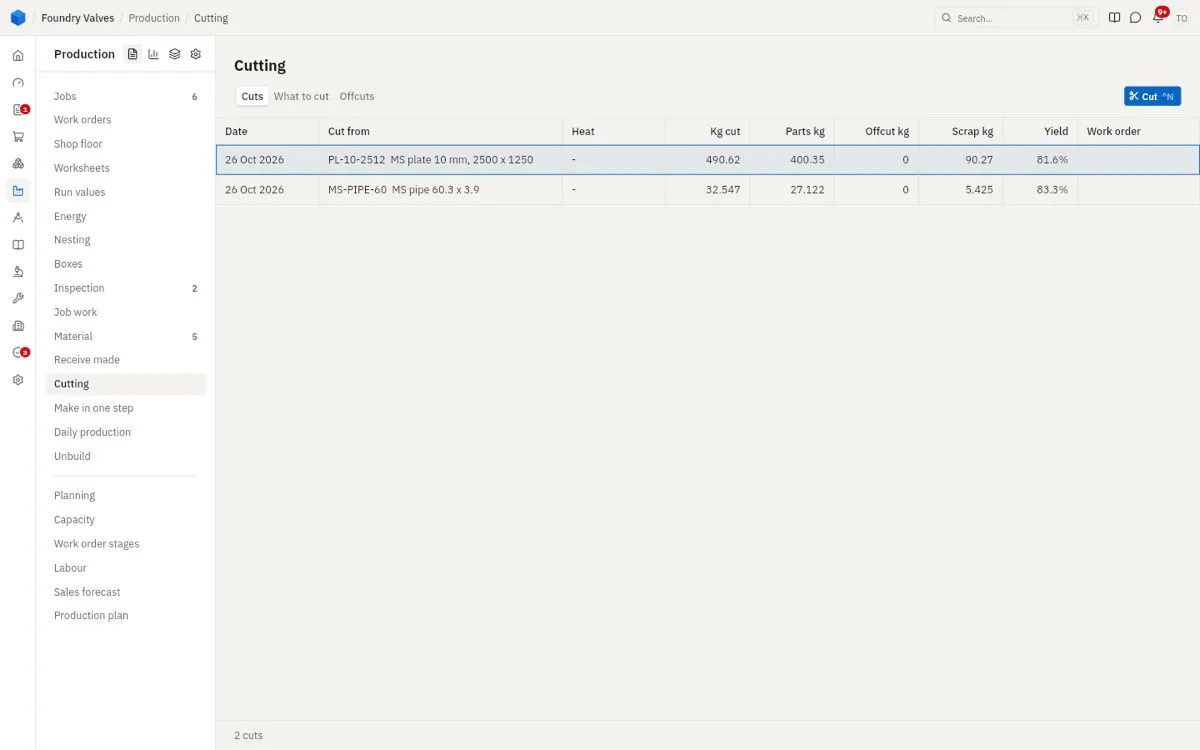
Plate, pipe and bar cut into parts: what was cut from, kg cut, parts made, offcut and scrap, and the yield. What to cut and Offcuts show what is waiting and what is left.
Make in one step
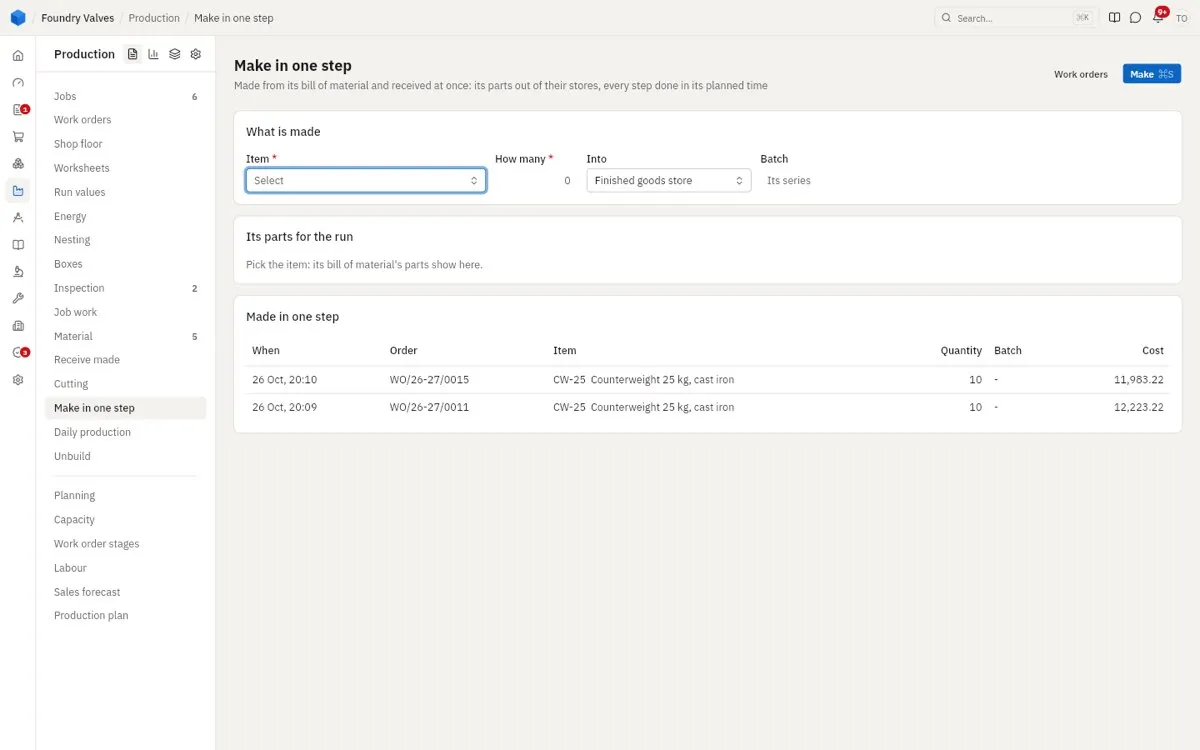
For something made all at once: pick the item and how many, its parts come out of their stores, it goes in - every step done in its planned time.
Daily production
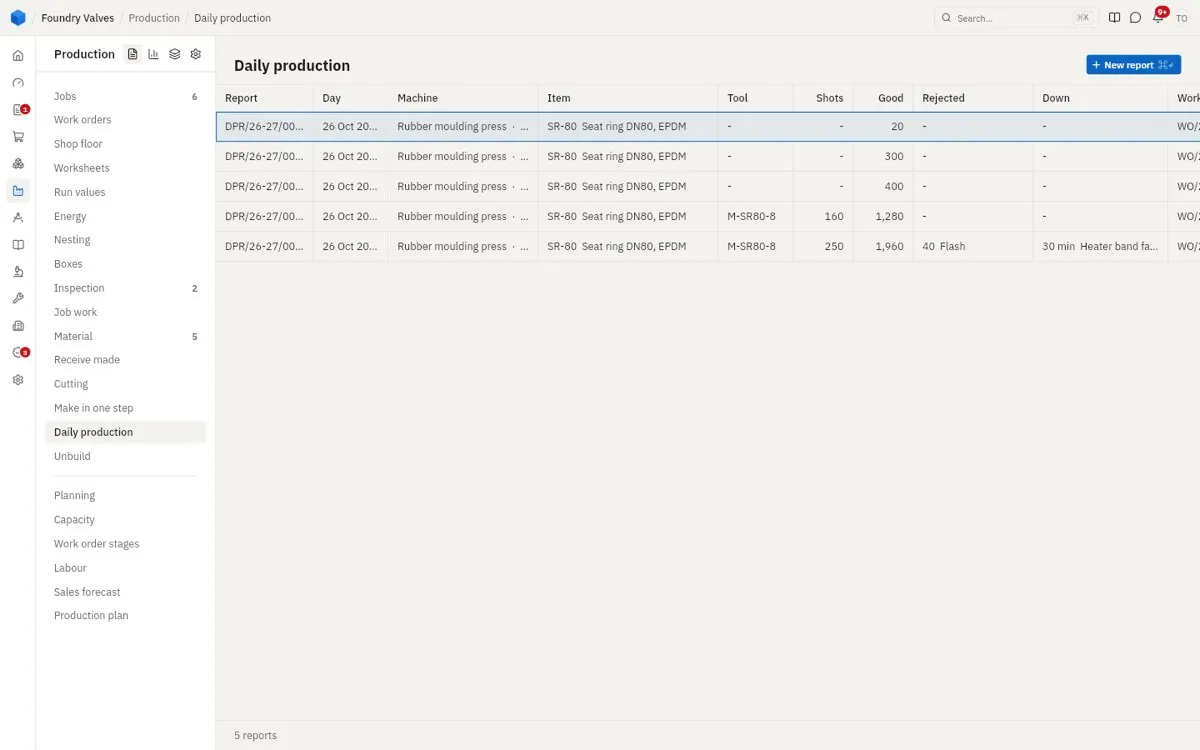
A machine's report for a day and shift: the item, the tool (mould or die), the shots, good and rejected, and the downtime with why.
Unbuild
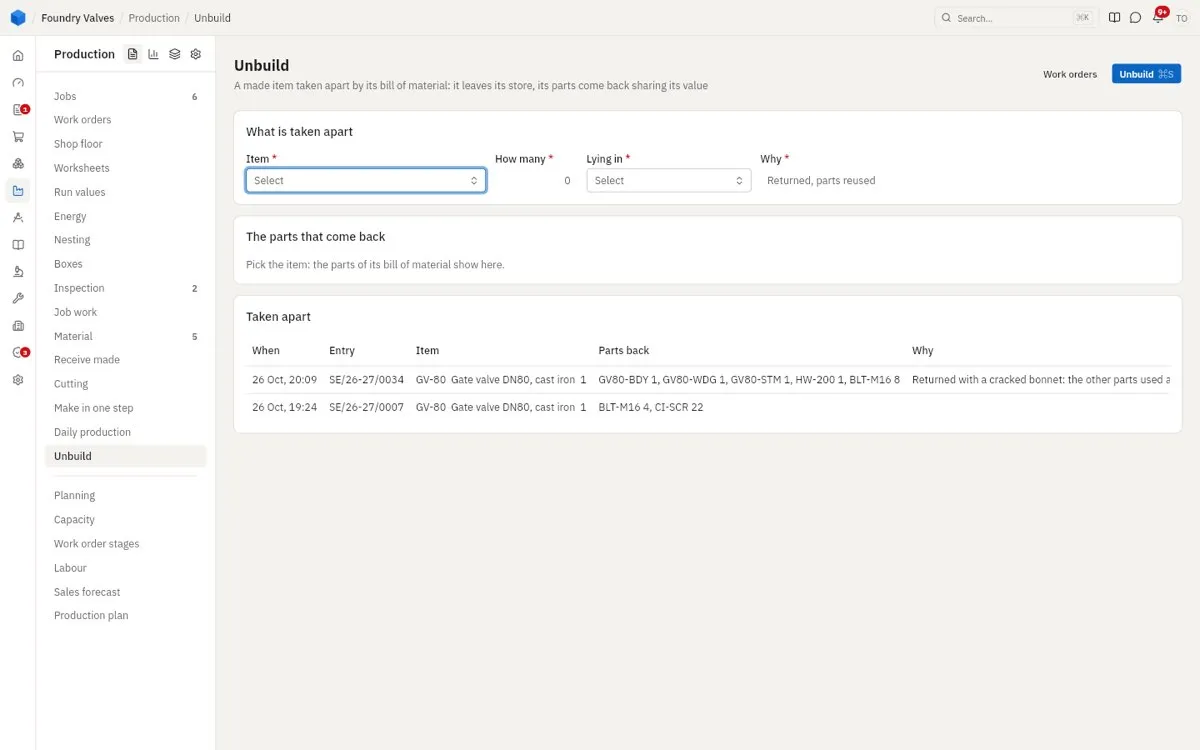
A made item taken apart by its bill of material: it leaves its store, its parts come back sharing its value.
Planning
Planning
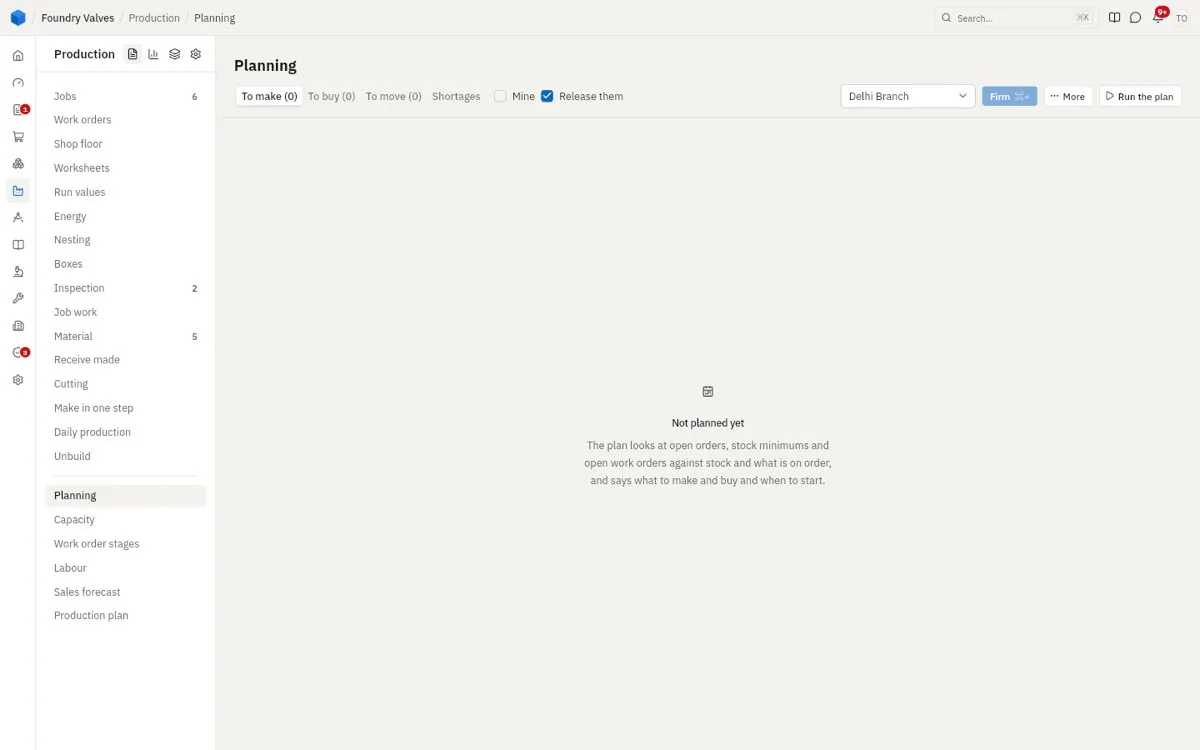
Run the plan: it looks at open sales orders, stock minimums and open work orders against stock and what is on order, and says what to make, what to buy, what to move and when to start each. Firm turns the plan's lines into work orders and requisitions. Shortages lists what is short.
Capacity
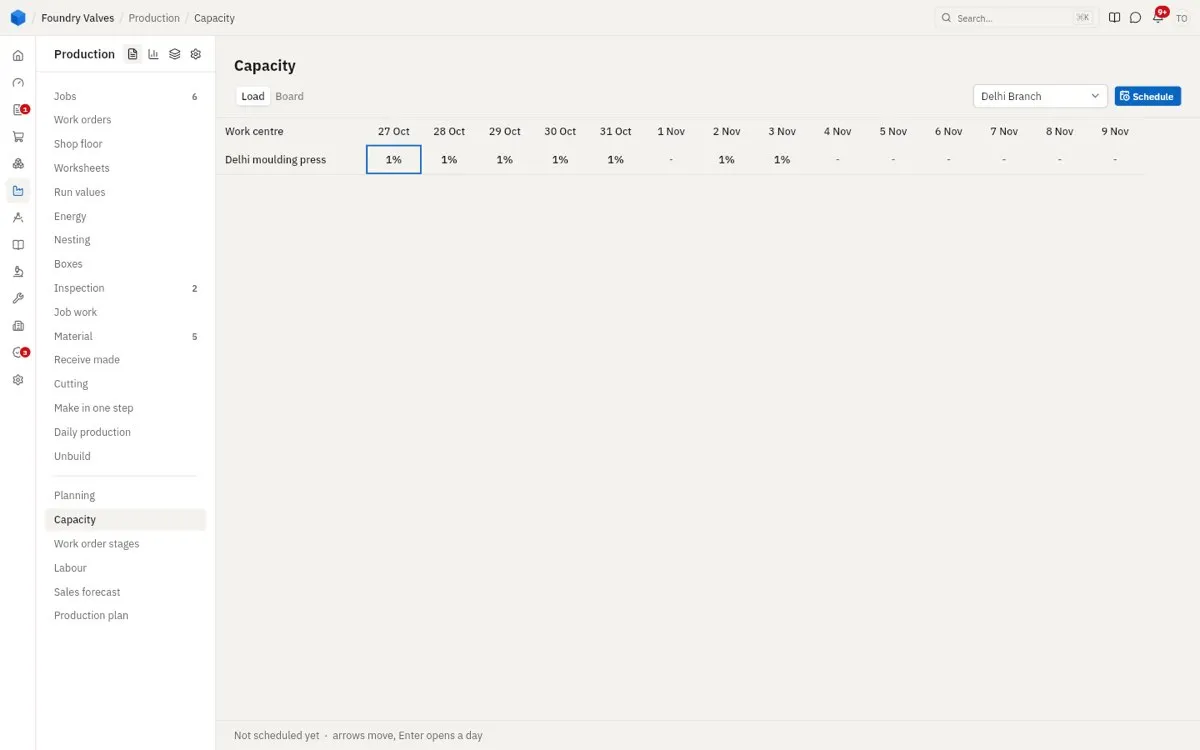
Each work centre's load day by day - how full its hours are with the work orders on it. Schedule sets each order's steps into the days; Board shows them to move about.
Work order stages
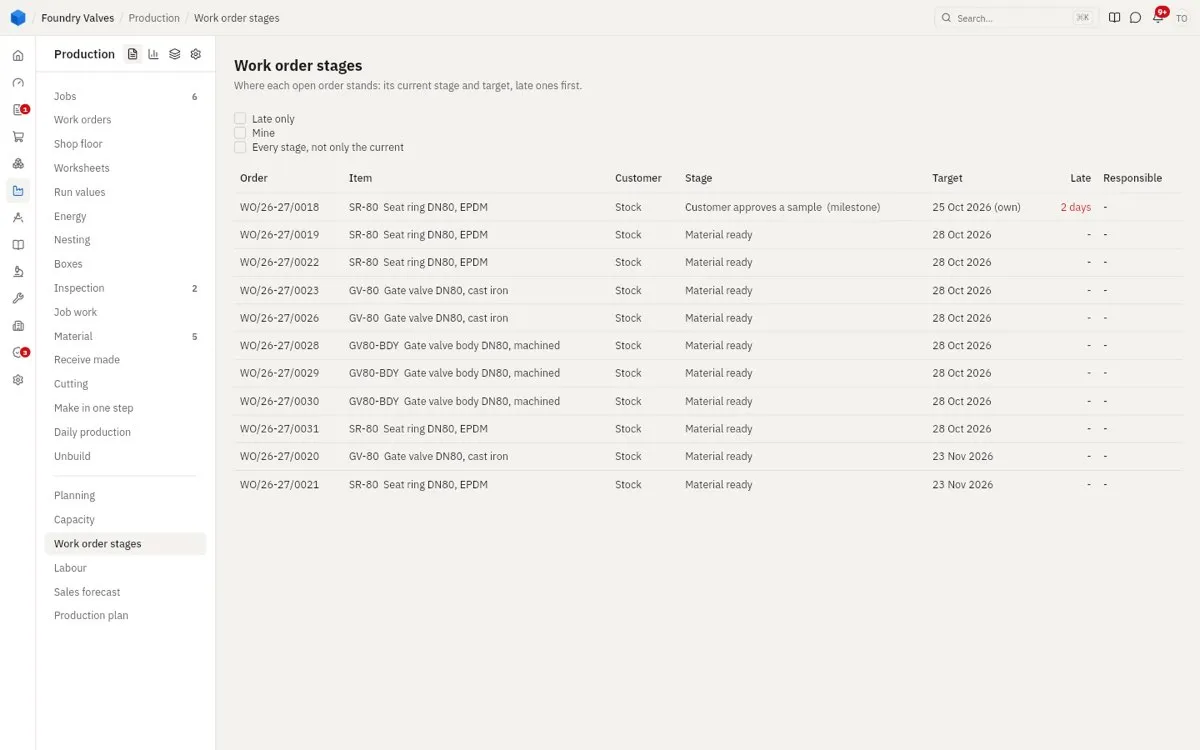
Where each open order stands in its stages (material ready, making, inspection, the customer's inspection call, into the store) against the target date of each, late ones first.
Labour
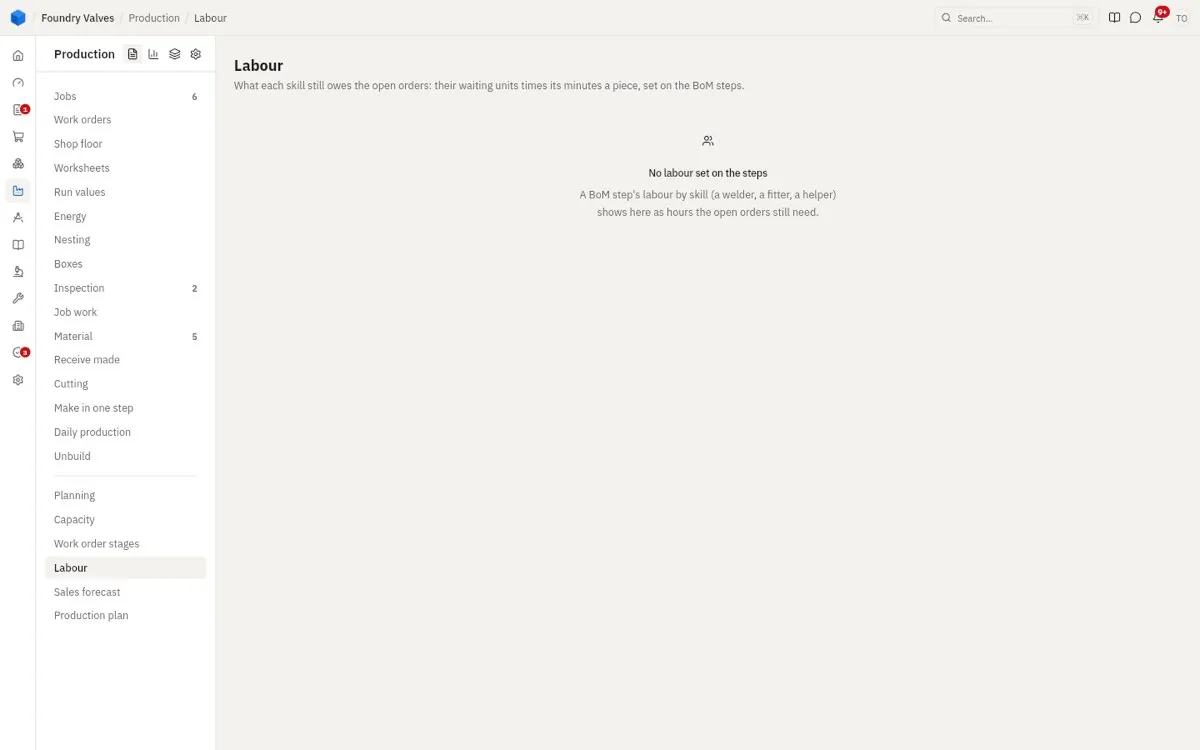
What each skill (welder, fitter, helper) still owes the open orders: their waiting pieces times the minutes a piece set on the BoM steps.
Sales forecast
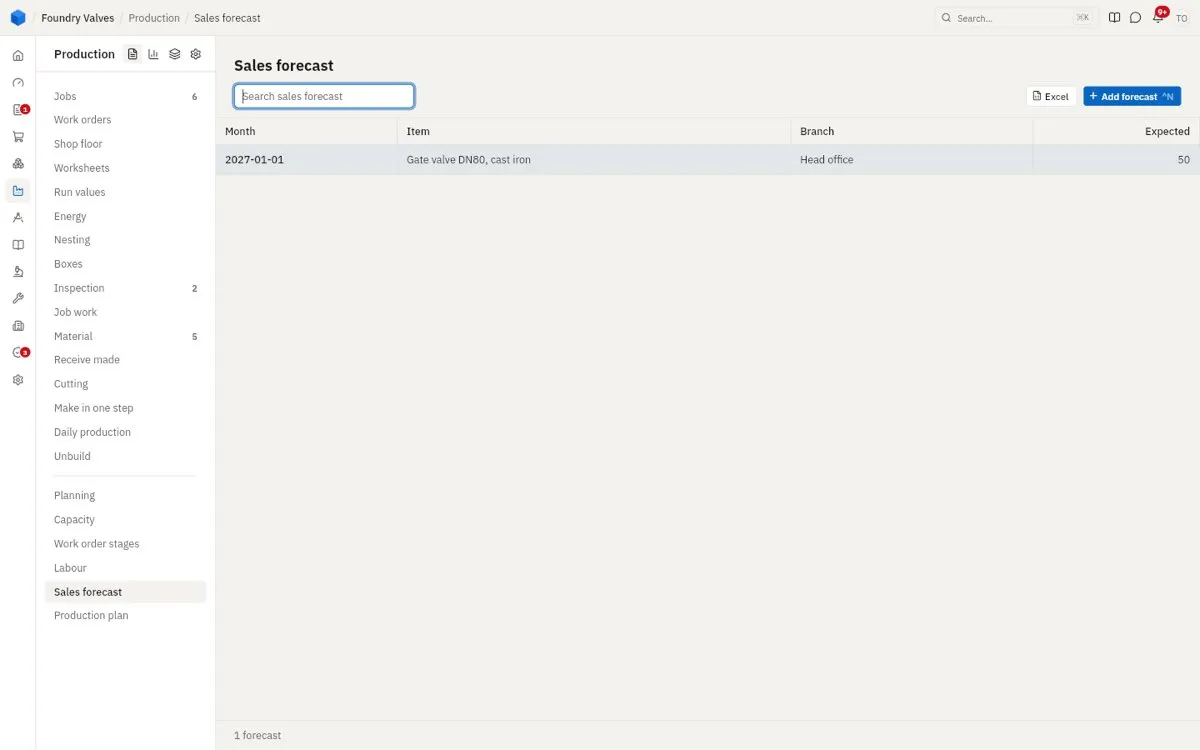
What we expect to sell of an item in a month, so the plan makes ahead of the orders.
Production plan
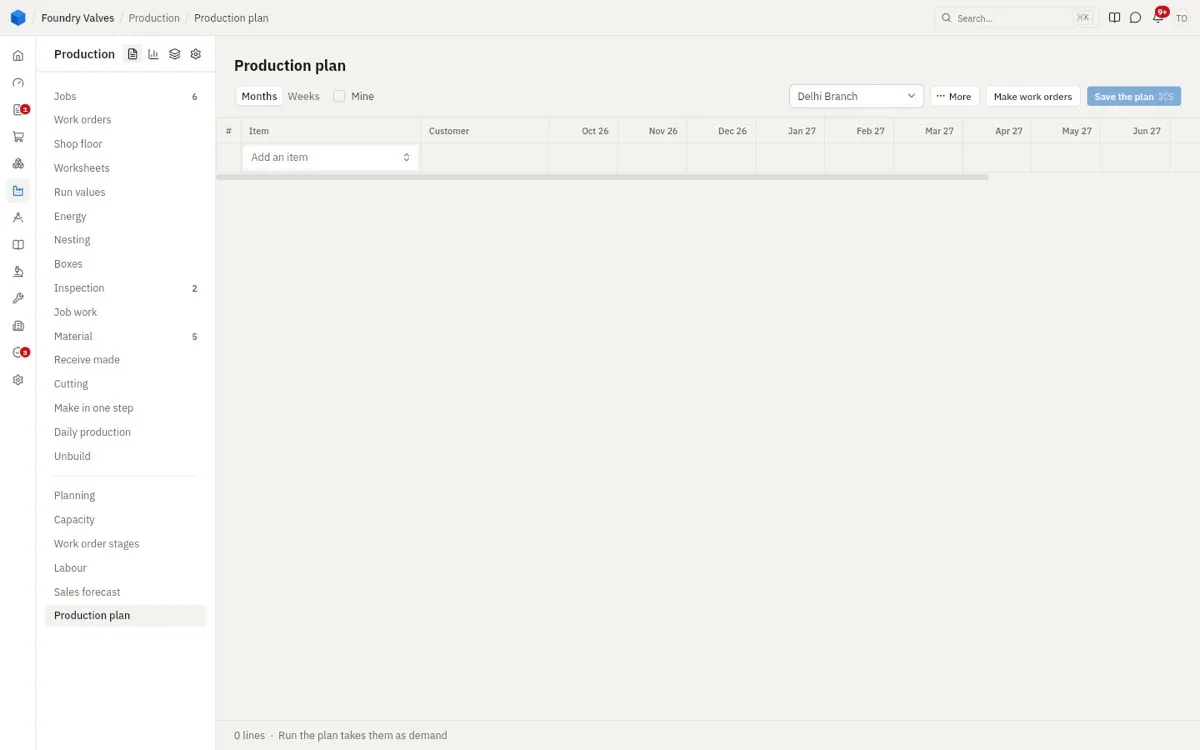
How many of each item to make a month (or week), typed by hand; Save the plan and the planning run takes it as demand. Make work orders makes them straight.
Masters
Work centres
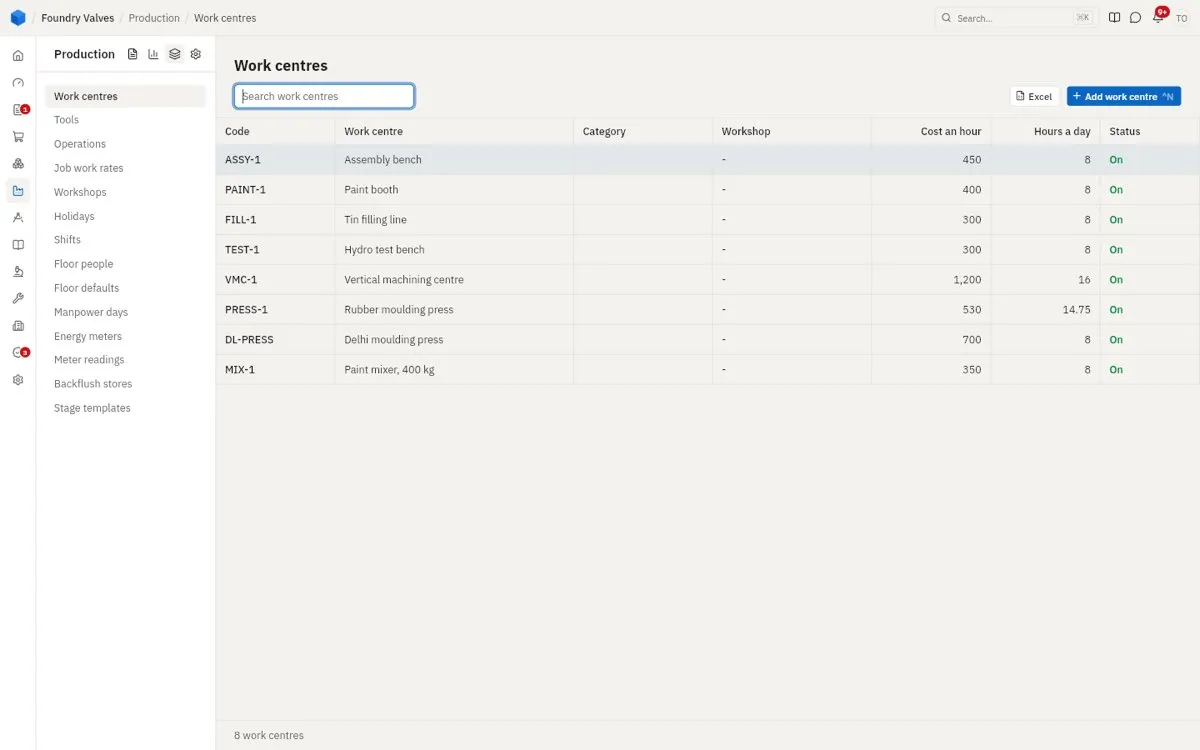
Where work is done - a machine, a bench, a line - with its cost an hour (what an hour there adds to a product's cost) and how many hours a day it runs.
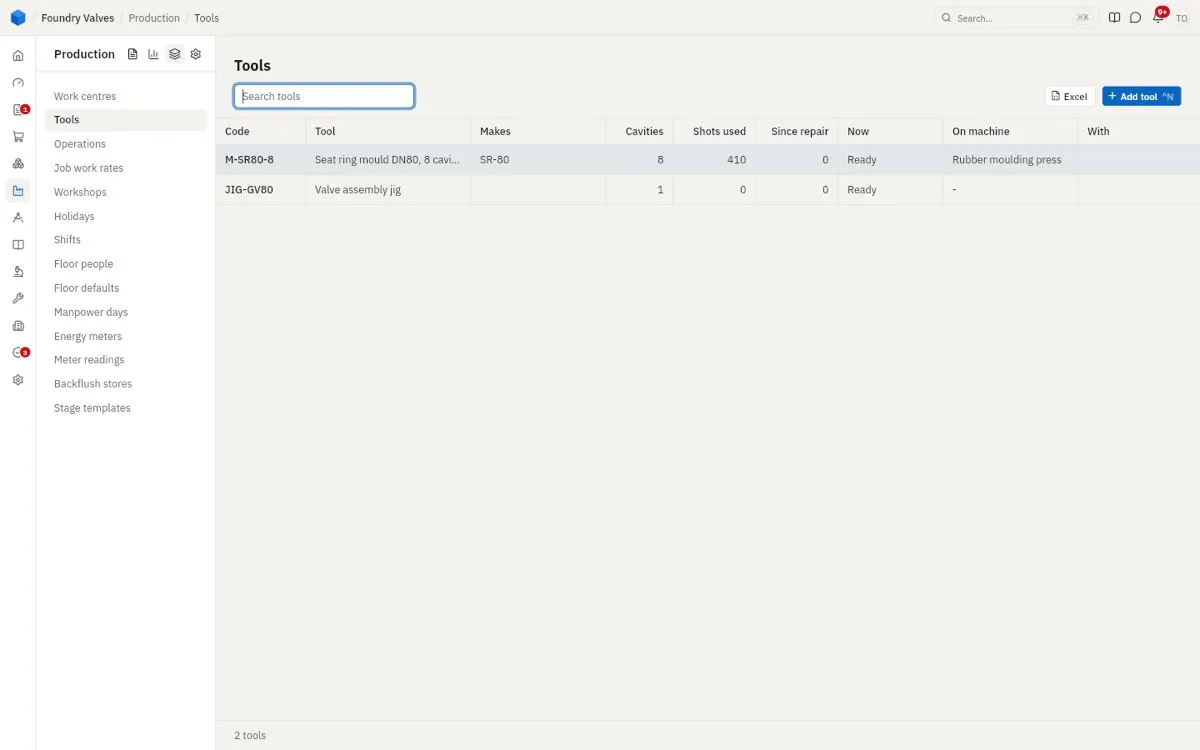
Tools
Moulds, dies and jigs: what each makes, its cavities, shots used and since its last repair, where it is now.
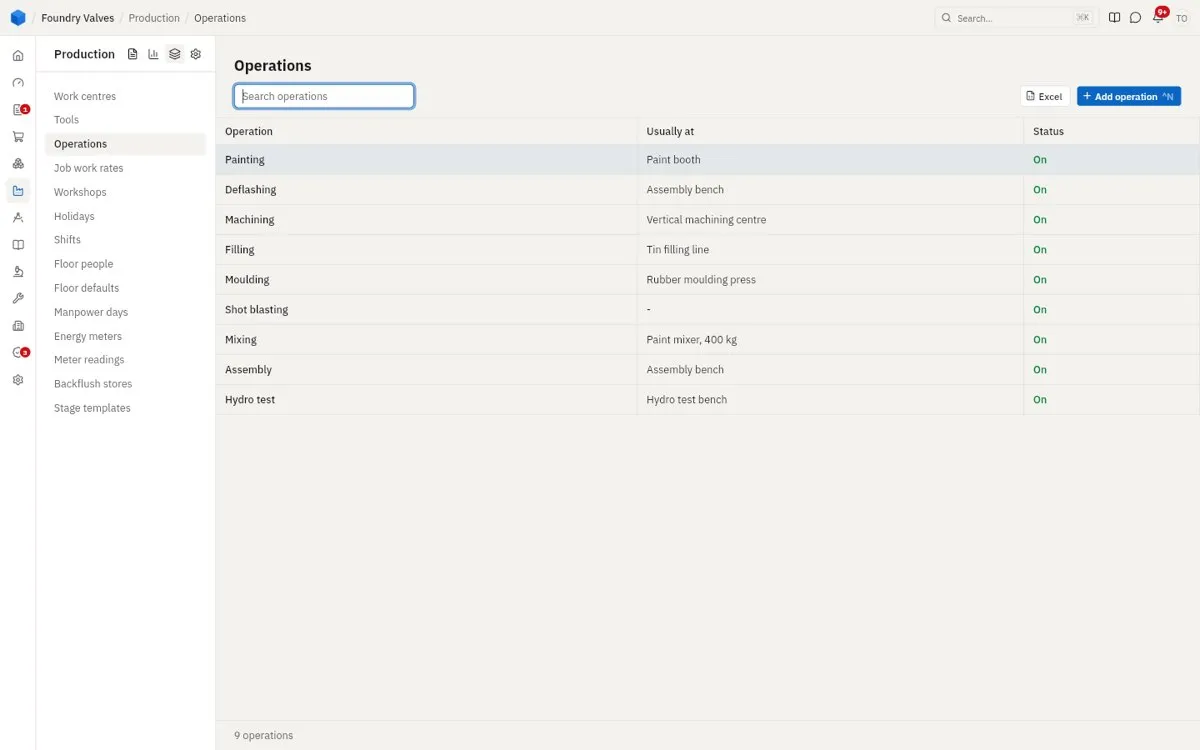
Operations
The steps used in BoMs (machining, painting, hydro test) and the work centre each is usually done at.
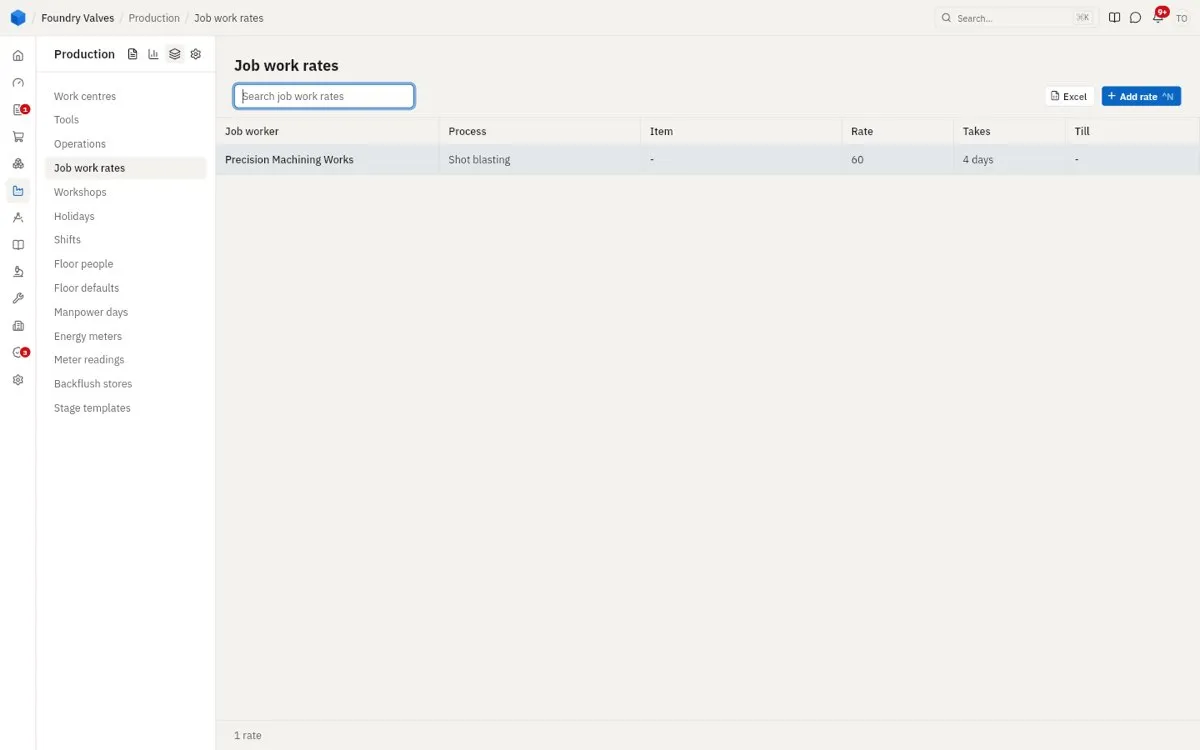
Job work rates
What each job worker charges for a process, and how many days it takes.
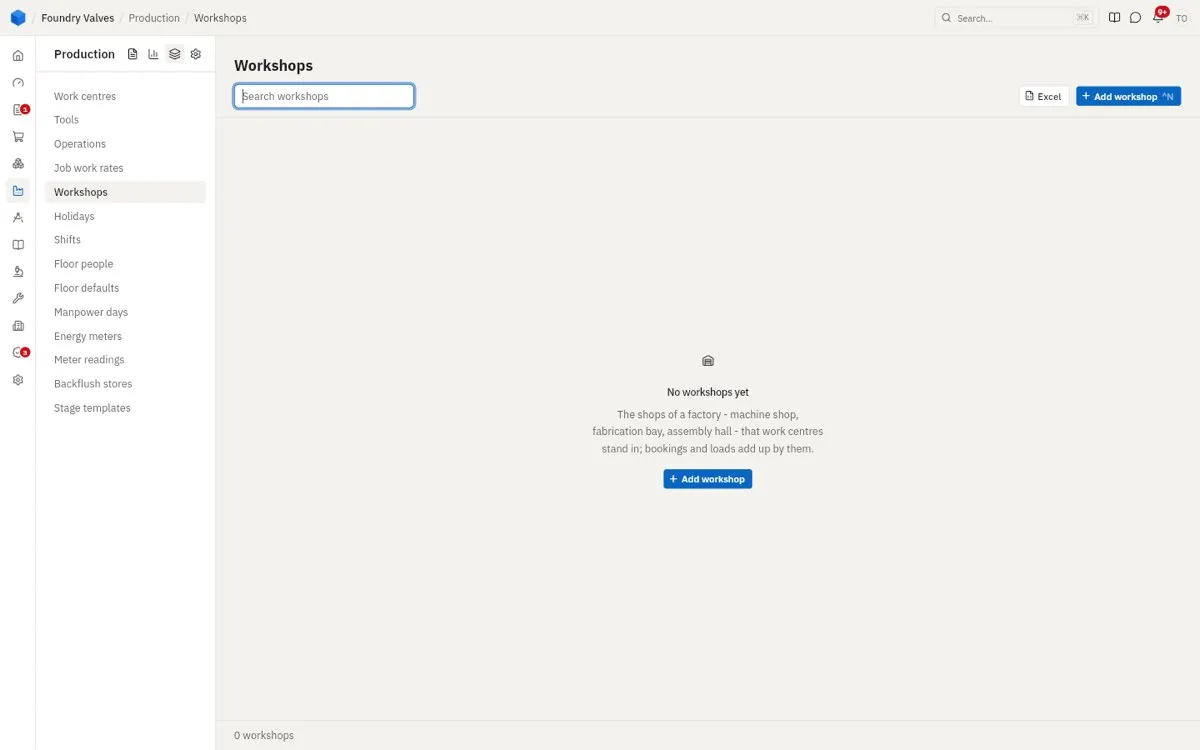
Workshops
The shops of a factory - machine shop, fabrication bay, assembly hall - that work centres stand in.
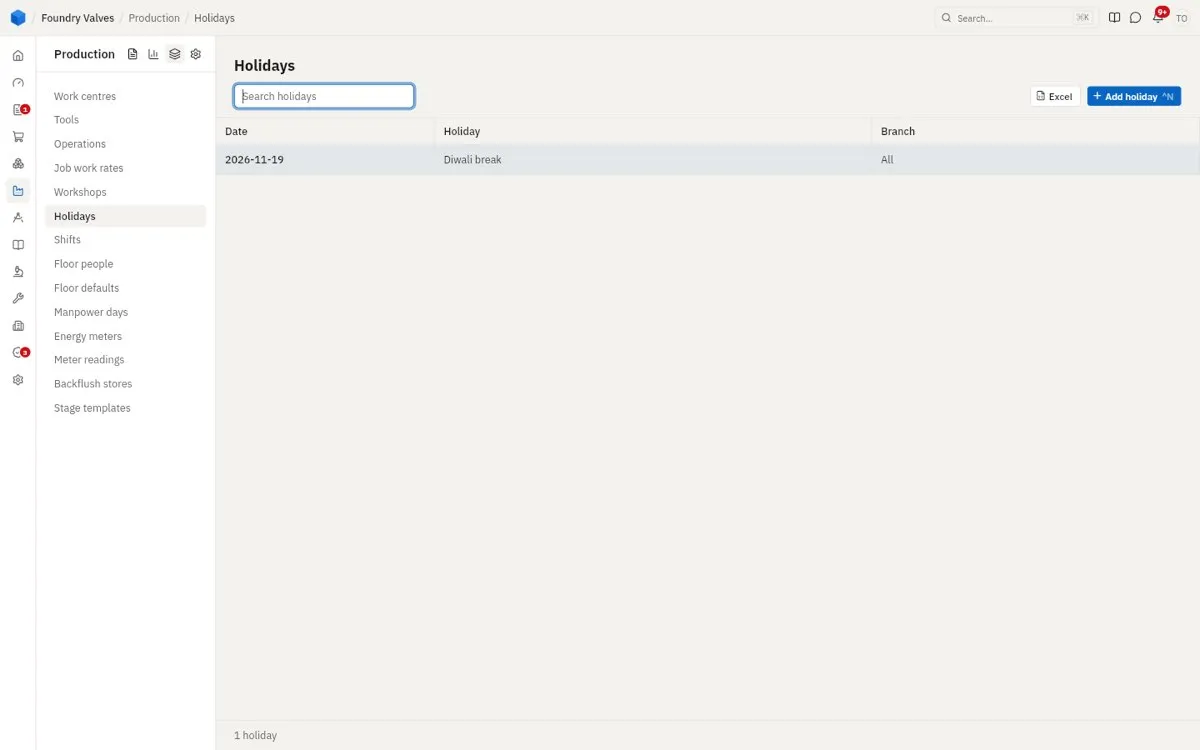
Holidays
Days the factory is shut, so planning skips them.
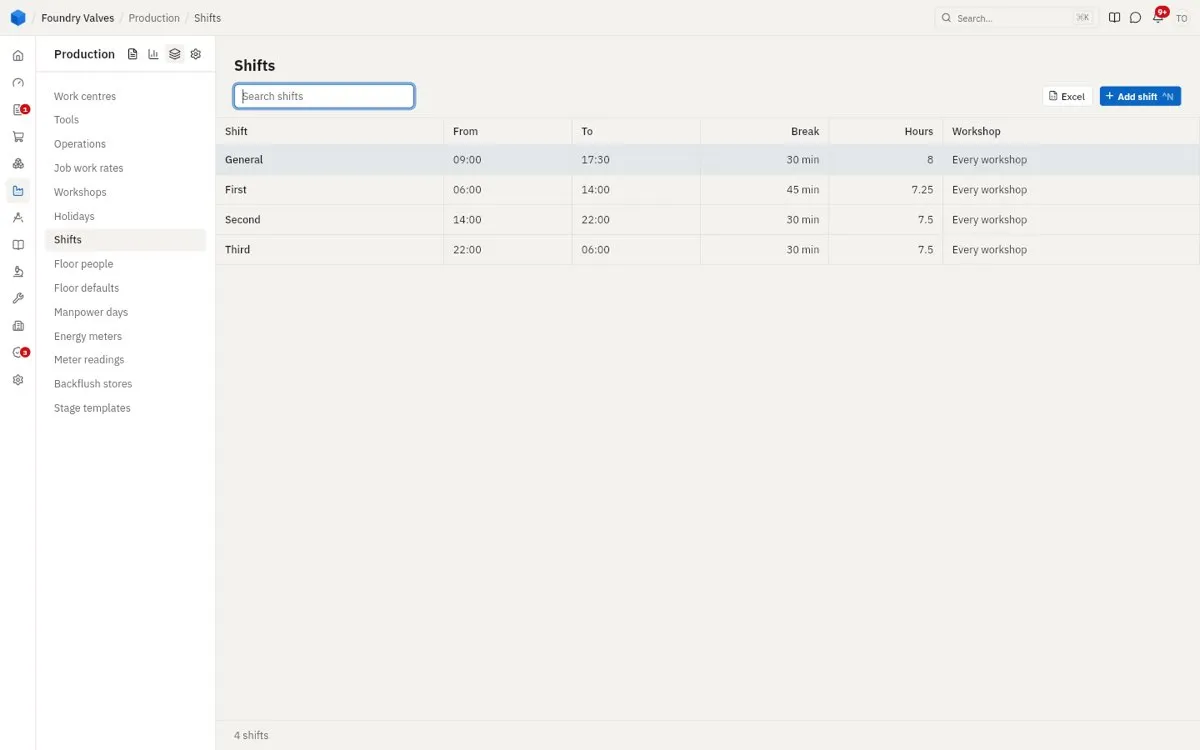
Shifts
Each shift's hours and break.
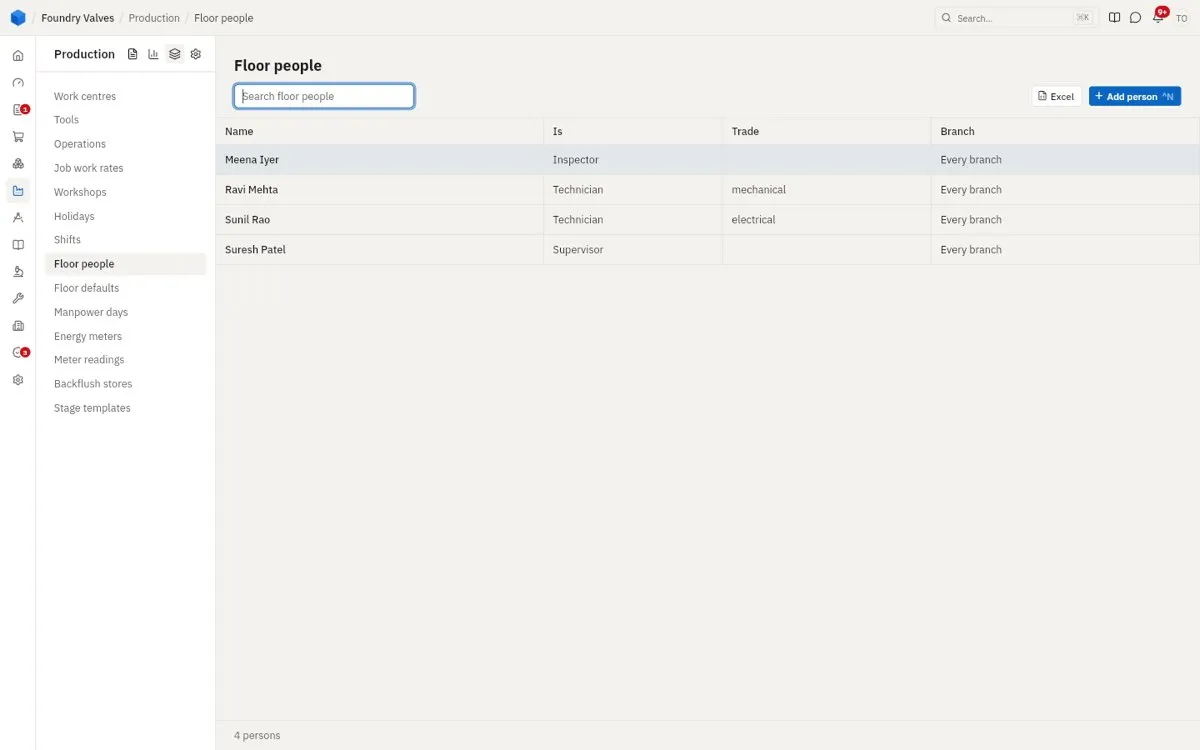
Floor people
Operators, technicians, supervisors and inspectors on the floor, with their trade.
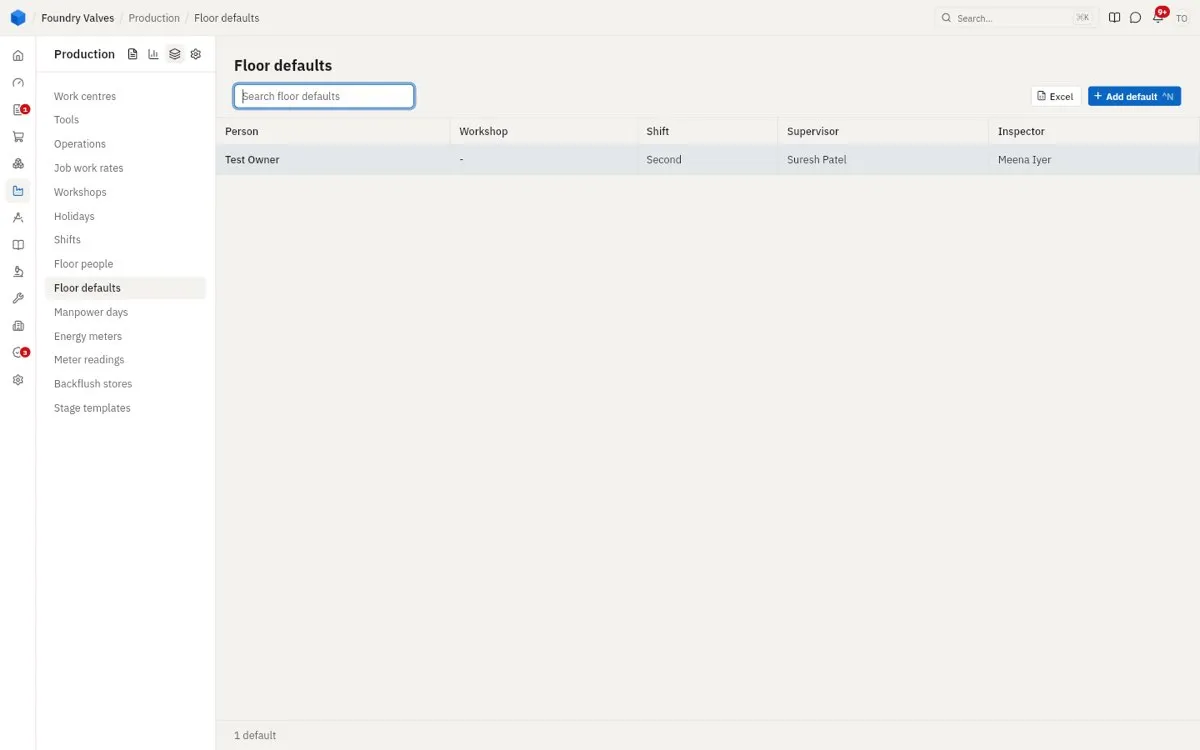
Floor defaults
For each person who books: their usual workshop, shift, supervisor and inspector, filled in for them.
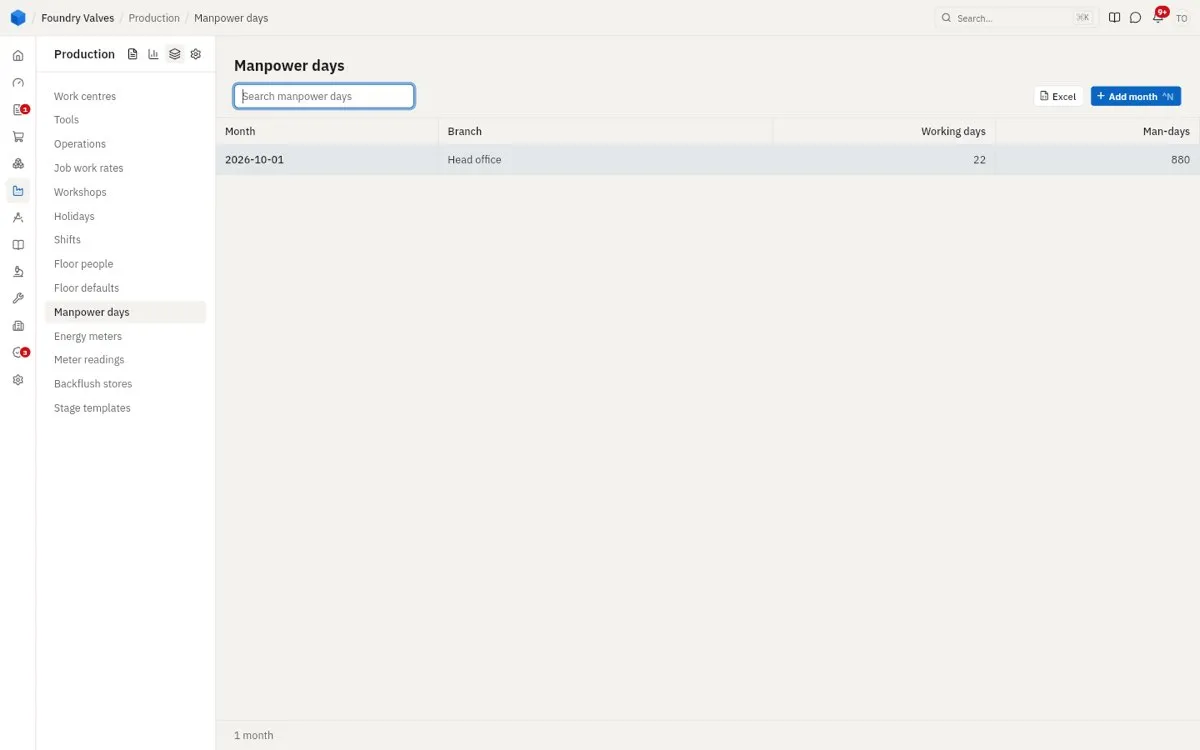
Manpower days
Working days and man-days a month - the labour cost is spread over them.
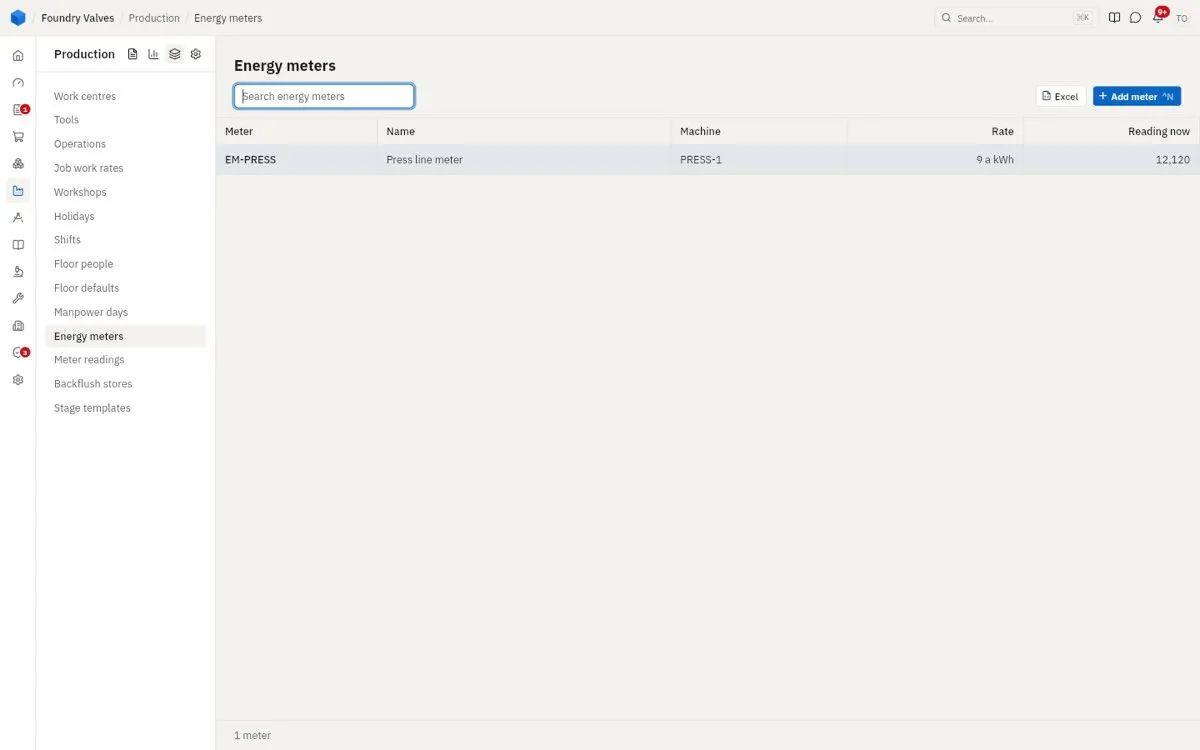
Energy meters
Power meters, the machine each measures and the rate a kWh.
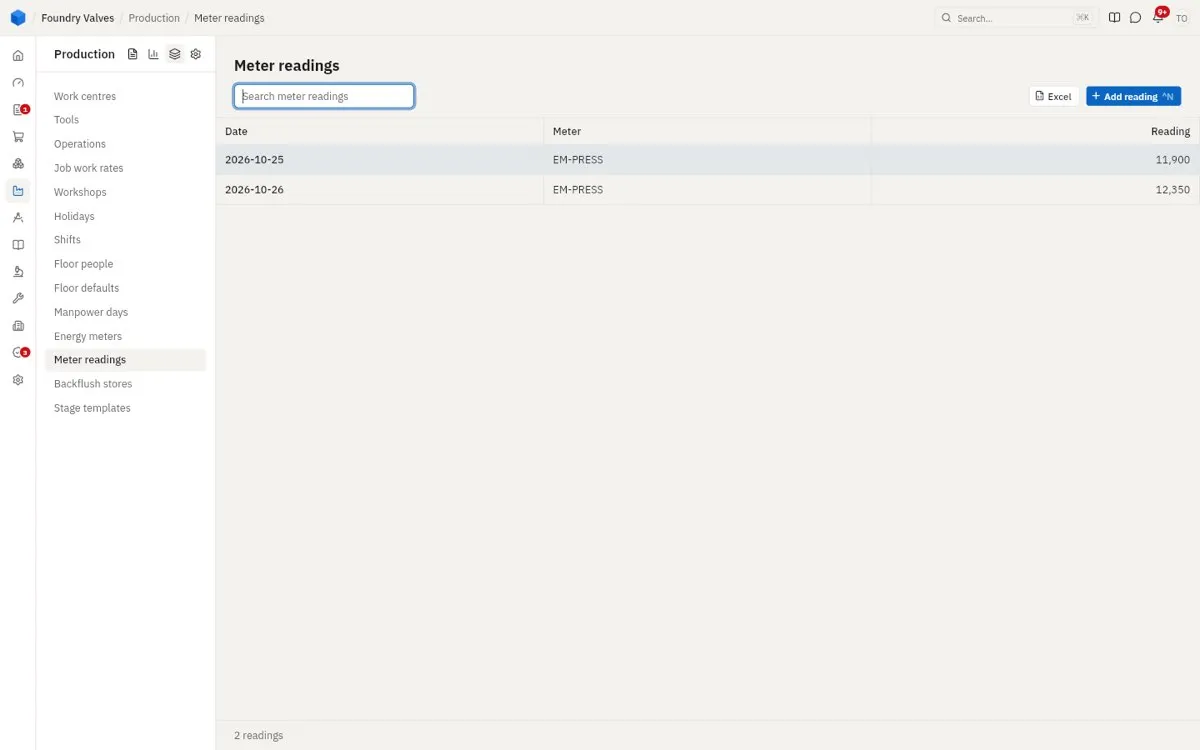
Meter readings
Each meter's reading a day; the difference is the power used.
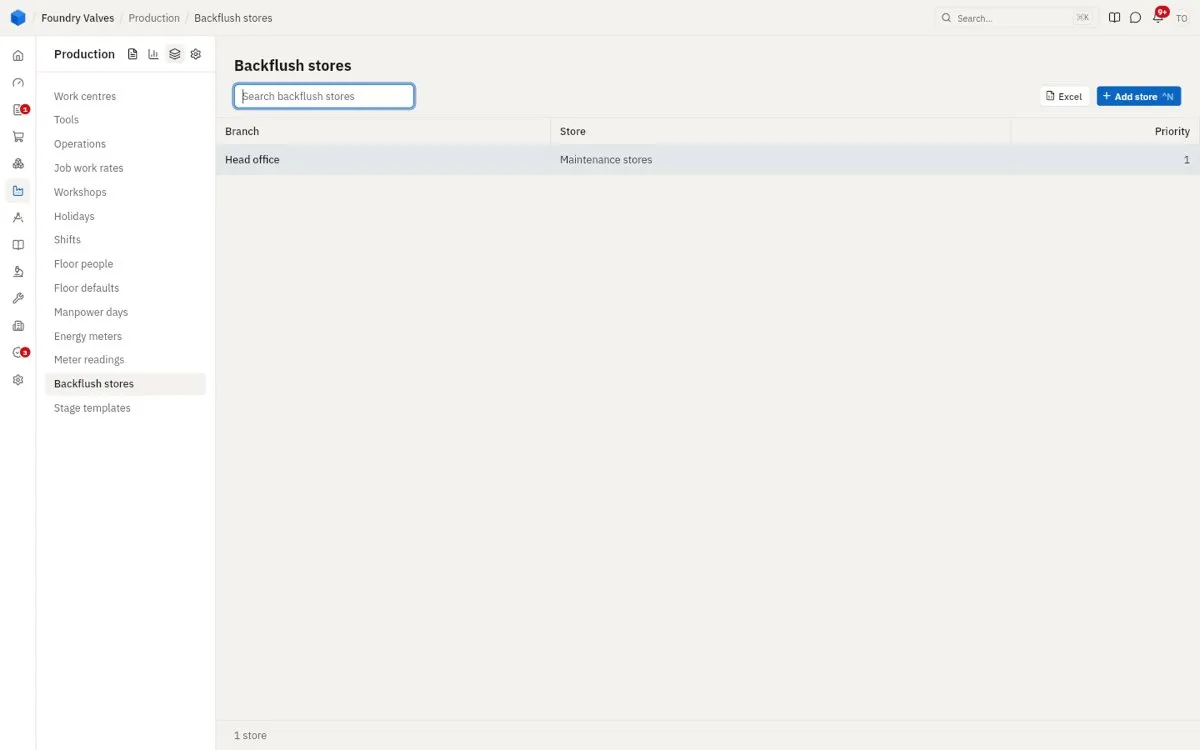
Backflush stores
Where parts used up as they are made are taken from, store by store in order.
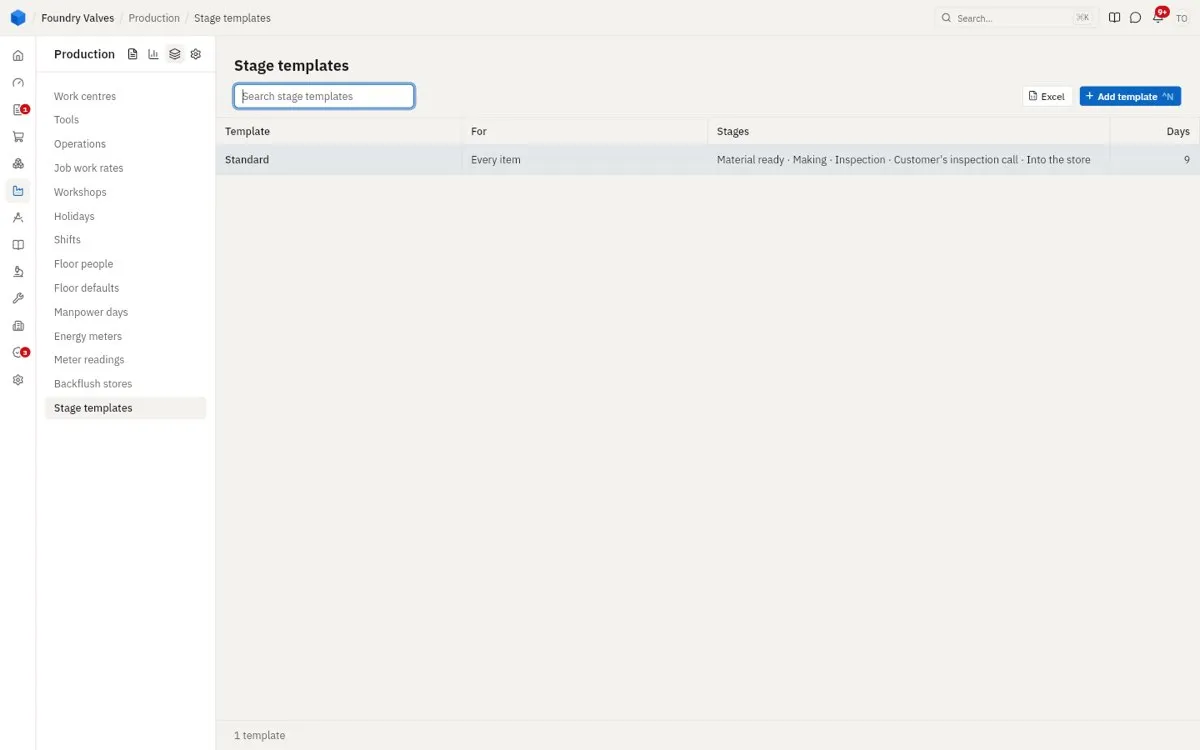
Stage templates
The stages an order goes through, with the days each takes - laid on each work order to watch it by.
Reports
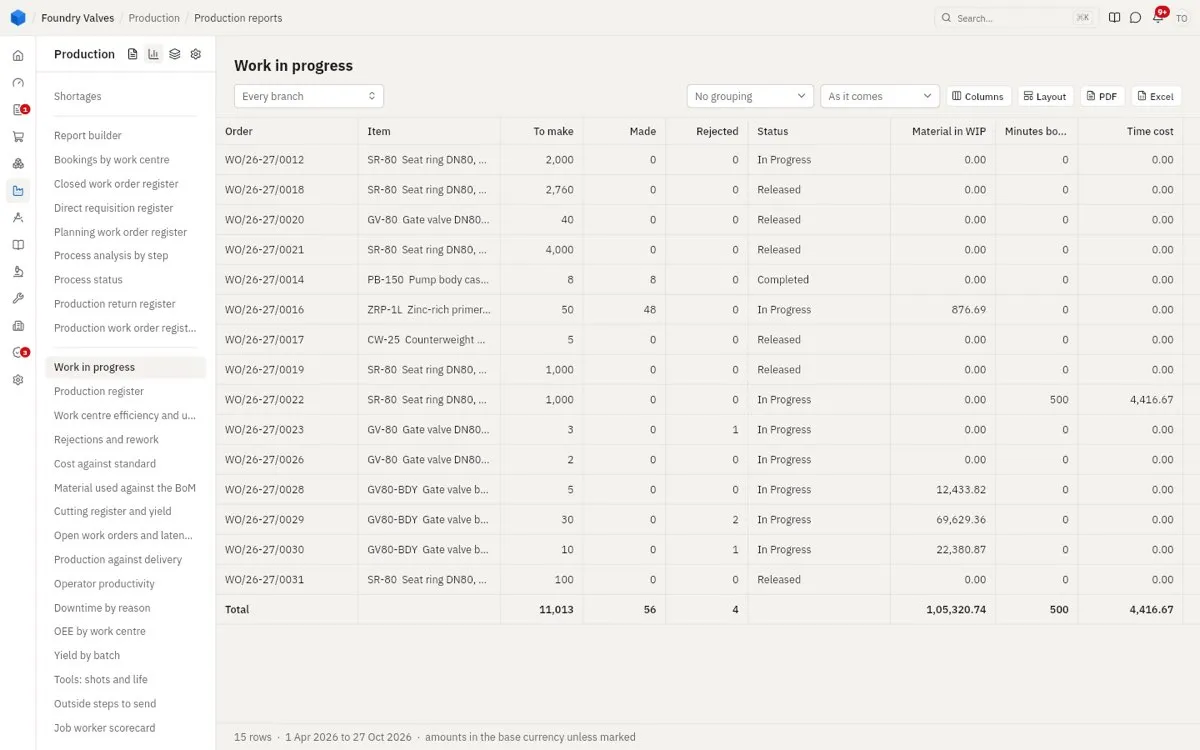
Production reports
Every production report, down the left: work in progress (each order, its material and time cost so far), production registers, rejections and their reasons, downtime, efficiency, costs of what was made.
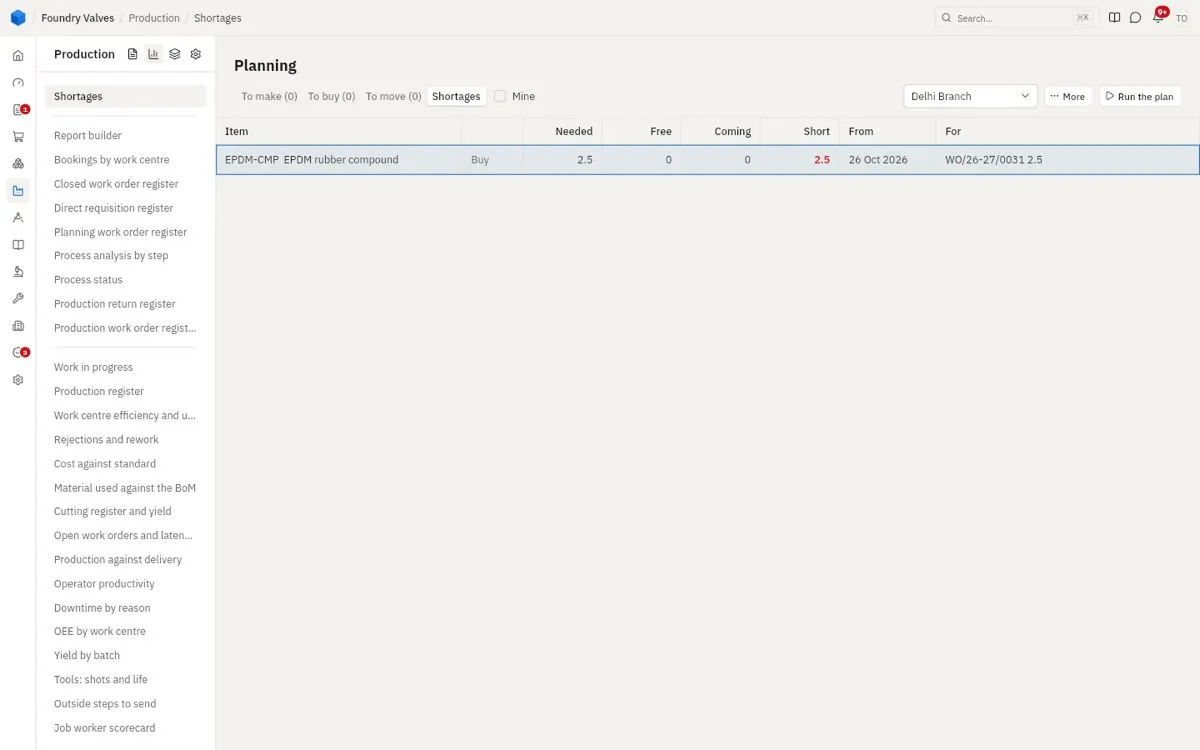
Shortages
What the plan found short: needed, free, coming, short, from when, and for which order.
Settings
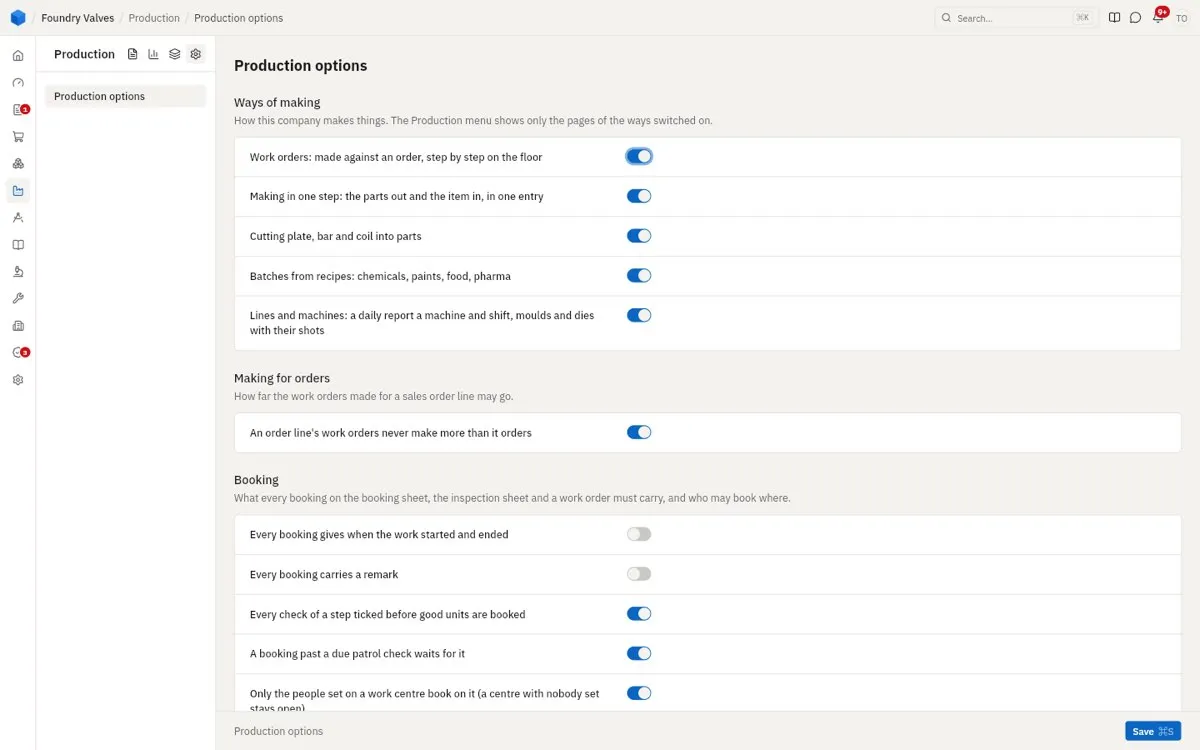
Production options
The ways of making switched on; whether an order line's work orders may make more than it ordered; what every booking must carry (start and end times, a remark, its checks ticked); who may book where.
The main records, tab by tab
Work order
What it makes, how many, made so far, needed by, for which order. At its foot: Print, Change, Cancel, Sub-assembly orders (orders for its made parts), Close short, Issue (its material) and Receive. Tabs:
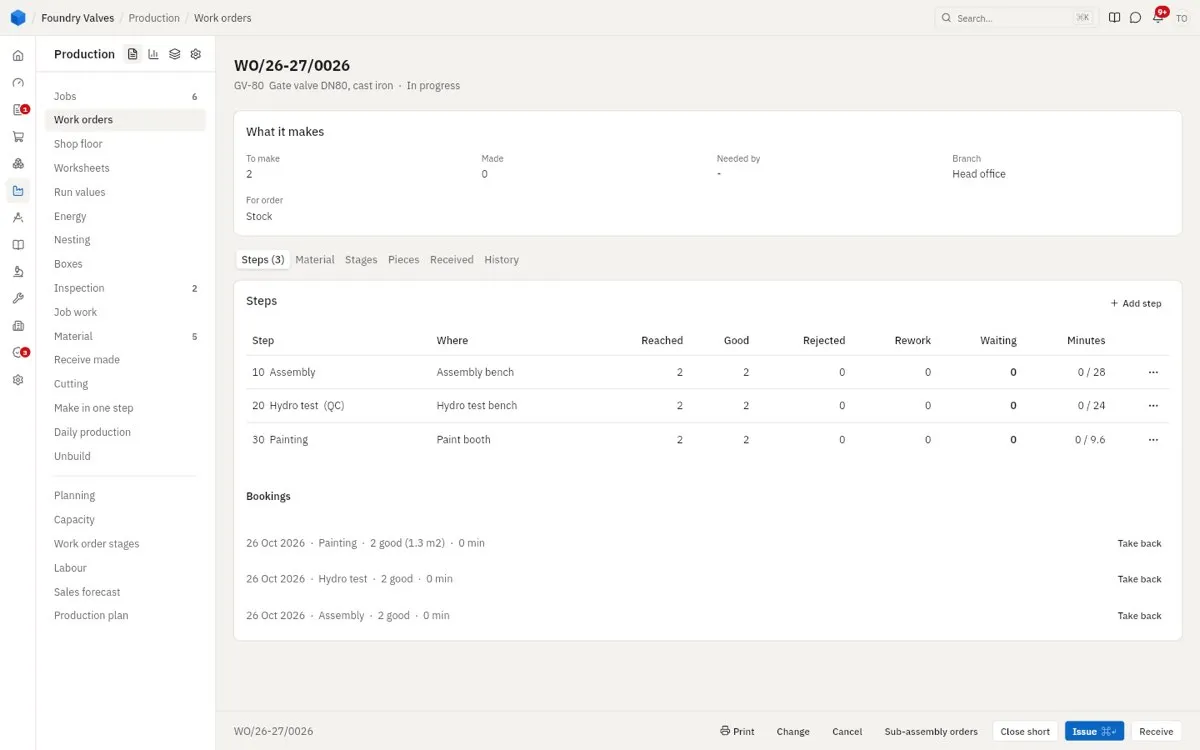
- Steps: each step, where, how many reached it, good, rejected, rework, waiting and minutes used against planned; the bookings, each one that can be taken back
- Material: each part needed, issued, used, still to issue, from which store, held, short, requisitioned, ordered; Issue, Return, Hold stock, Requisition the shortage, Change material
- Stages: its stages with their target dates, who is responsible, and Done
- Pieces: each piece numbered, followed through the steps
- Received: what it put into the store
- History: every step with when
Job
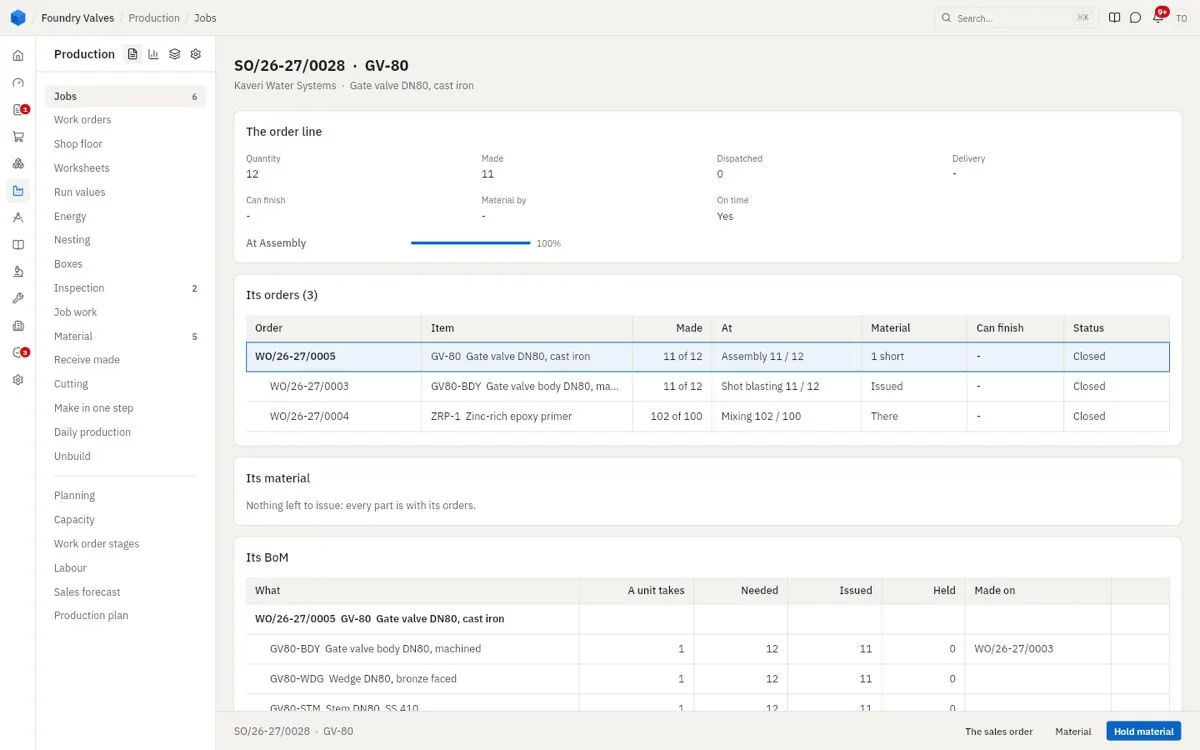
A sales order line seen from the floor: how many ordered, made, dispatched, when it can finish, where it is; its work orders (the item and its made parts) with each one's step and material; and its BoM line by line - needed, issued, held. Hold material keeps stock for it.
Worksheet
A machine and shift, and the jobs to run: each order and step, how many to make, operator, supervisor, minutes, from and to, and Book what was done. Fill from the schedule brings in what was planned for it.